When people search for the heaviest metals, they often mix two different metrics: density (mass per unit volume) and atomic weight (mass per mole of atoms). In engineering, “heavy” usually means high density, because density drives mass, inertia, shielding performance, and part weight for a given geometry.
This article separates those definitions, provides a list of metals by density, and explains where density matters in real hardware, from precision components to high-temperature tooling.
Heaviest metals: what does “heaviest” actually mean?
In materials science, “heaviest” typically maps to one of the categories below:
- Heaviest metals on Earth by density: highest mass per volume (g/cm³) at a stated temperature (usually ~20°C).
- Heaviest metals by weight (atomic weight): highest standard atomic weight (relative atomic mass), controlled by isotopic composition.
- “Heavy metals” in toxicology: a regulatory and biomedical concept, not a density ranking.
Density is the practical metric for structural mass, counterweights, X-ray shielding, and dynamic response. Atomic weight matters more in stoichiometry, diffusion, isotope work, and nuclear science.
What’s the heaviest metal: density settles the argument
What’s the heaviest metal if we mean “densest”? The answer is osmium.
High-precision measurements confirm that osmium is the densest stable element, with a room-temperature density of 22.59 g/cm³, narrowly exceeding that of iridium.
How close is “close”? If you take 22.59 g/cm³ (Os) vs 22.56 g/cm³ (Ir), the gap is about 0.03 g/cm³, roughly 0.13%. That is why older references sometimes disagreed before improved crystallographic measurements.
In a practical sense:
- 1 cm³ of osmium has a mass of about 22.6 g
- 1 liter (1000 cm³) would be about 22.6 kg
- it is roughly 2× denser than lead for the same volume
A key constraint is availability. Technical references report worldwide osmium production of ~500 kg/year and list its melting point near 3127°C (boiling near 5303°C).
Heaviest metal on Earth (by density): Osmium
Osmium’s density is best understood from the crystallographic (theoretical) density relationship:
ρ = (n · A) / (Nₐ · Vc)
where n is the number of atoms per unit cell, A is atomic weight, Nₐ is Avogadro’s number, and Vc is the unit-cell volume (with Vc = a³ for cubic crystals). This formulation makes the controlling variables explicit: high density comes from large atomic mass per atom and or small atomic volume per atom (small Vc for a given n). (University lecture notes commonly present this unit-cell density relation in this exact form.)
For osmium, both terms work in the “high density” direction:
- High atomic mass: Os has A ≈ 190.23 g/mol, so each atom contributes substantial mass.
- Efficient packing: Osmium adopts a the hexagonal close-packed (hcp) at ambient conditions, with a packing efficiency comparable to fcc (atomic packing factor ≈ 0.74). Close packing maximizes n per volume relative to open structures.
- Unusually small atomic volume for a 5d metal: Heavy 5d elements exhibit contraction of s (and partly p) orbitals and related shifts in d-shell energies due to relativistic effects, which can reduce effective radii and hence unit-cell volume. Pyykkö’s Chemical Reviews treatment describes relativistic orbital contraction as a fundamental driver of structural trends in the sixth row, including measurable radial shrinkage in heavy elements and pronounced local anomalies around Au. Those same relativistic mechanisms, together with the lanthanide contraction trend across the period, contribute to compact metallic radii in the Os Ir Pt region.
- Low compressibility (high bulk modulus): Osmium is among the least compressible metals measured; while compressibility does not set ambient density directly, it reflects a steep interatomic potential that resists volume increase under stress and generally correlates with compact bonding and small equilibrium volumes.
From a measurement standpoint, the “osmium vs iridium” question was settled using high-precision values derived from crystallography based density determination: ρ(Os) = 22.589 ± 0.005 g/cm³ vs ρ(Ir) = 22.562 ± 0.011 g/cm³ under normal conditions, so the difference is real but very small.
General physical properties that control the density of metals
At room temperature and ambient pressure, a metal’s density is governed primarily by the same mass-over-volume logic:
- Atomic mass (A): heavier nuclei increase mass per atom.
- Atomic or metallic radius (effective size): smaller radii reduce Vc; radii depend on electron configuration, shielding, and bonding.
- Crystal structure and packing factor: close-packed fcc/hcp (APF ≈ 0.74) typically allow higher densities than bcc (APF ≈ 0.68) or more open structures.
- Bonding strength and equilibrium spacing: stronger bonding can pull atoms closer, lowering the equilibrium volume.
- Relativistic effects and periodic trends: increasingly important for late 5d and 6p elements, shifting radii and bond lengths; they are part of why some heavy metals are denser than naive nonrelativistic trends suggest.
- Thermal expansion (α): density decreases with temperature as lattice parameters expand.
- Compressibility (bulk modulus K): under pressure, less compressible metals change density less per GPa; relevant for high-pressure applications and for comparing equation-of-state behavior.
- **Defects and porosity (processing-dependent): vacancies, solute additions, and especially porosity reduce the effective density relative to the **theoretical crystal density, which is critical for powder metallurgy and AM.
Densest metals: list of metals by theoretical density (crystal density)
Below is an extended list of metals by density using theoretical (fully dense) values at ~20°C wherever applicable. In practice, measured density can be lower due to porosity (powder metallurgy, AM lack-of-fusion), alloying, phase fractions, and trapped gas. For a few metals with complex allotropy (notably actinides), density is phase dependent.
| Rank | Metal | Theoretical density (g/cm³, ~20°C) | Notes engineers care about |
| 1 | Osmium (Os) | 22.59 | densest stable element; rare; costly; OsO₄ hazard in oxidation contexts |
| 2 | Iridium (Ir) | 22.56 | outstanding corrosion resistance; high melting point; difficult machining; high costs |
| 3 | Platinum (Pt) | 21.45 | noble metal; catalytic; stable in aggressive environments |
| 4 | Rhenium (Re) | 21.02 | high-temperature strength; used for superalloy modification and refractory parts |
| 5 | Neptunium (Np) | 20.45 | actinide; phase and handling constraints dominate; niche nuclear materials |
| 6 | Plutonium (Pu) | 19.84 | strongly phase dependent; radiological controls; used mainly in nuclear domain |
| 7 | Gold (Au) | 19.32 | corrosion proof; high conductivity; soft, often alloyed for strength |
| 8 | Tungsten (W) | 19.25 | very high melting point; shielding and high-temperature tooling; brittle at RT |
| 9 | Uranium (U) | 19.05 | high density; radiological constraints; oxidation behavior important |
| 10 | Tantalum (Ta) | 16.69 | excellent corrosion resistance; refractory behavior; good ductility vs many refractories |
| 11 | Mercury (Hg) | 13.53 | liquid at room temperature; density is temperature sensitive; toxicology dominates |
| 12 | Hafnium (Hf) | 13.31 | high neutron absorption; oxidation behavior important at elevated temperature |
| 13 | Rhodium (Rh) | 12.41 | corrosion resistant; catalytic; high cost |
| 14 | Palladium (Pd) | 12.02 | hydrogen absorption; catalytic; used in electronics and membranes |
| 15 | Lead (Pb) | 11.34 | shielding and ballast; regulatory and toxicology constraints |
| 16 | Silver (Ag) | 10.49 | highest electrical conductivity among metals; tarnish and diffusion issues |
| 17 | Molybdenum (Mo) | 10.28 | refractory; good high-temperature strength; oxidation limits in air |
| 18 | Bismuth (Bi) | 9.78 | low thermal conductivity; brittle; expands on solidification |
| 19 | Copper (Cu) | 8.96 | high conductivity; widely used; oxygen content can matter for processing |
| 20 | Nickel (Ni) | 8.91 | corrosion resistant alloys; austenite stabilizer; magnetic behavior relevant |
| 21 | Cobalt (Co) | 8.90 | high-temperature alloys; magnetic; excellent wear and hot-corrosion resistance in Co-based alloys (e.g., Stellite) |
| 22 | Cadmium (Cd) | 8.65 | toxic; niche plating and nuclear control applications |
| 23 | Iron (Fe) | 7.87 | baseline structural metal; density reference for steels |
| 24 | Tin (Sn) | 7.31 | solder systems; low melting point; phase (white/gray) considerations |
| 25 | Manganese (Mn) | 7.21 | key alloying addition in steels; reactive; prone to evaporation |
| 26 | Chromium (Cr) | 7.19 | corrosion resistance in stainless steels; brittle as pure metal |
| 27 | Zinc (Zn) | 7.14 | galvanizing; low melting point; vaporization in thermal processes |
| 28 | Antimony (Sb) | 6.68 | brittle; used in Pb-based and Sn-based alloys; flame-retardant chemistry |
| 29 | Vanadium (V) | 6.11 | strong carbide former; important alloying element for high strength steels and Ti alloys |
| 30 | Titanium (Ti) | 4.51 | high specific strength; oxidation and interstitial pickup (O, N) matter strongly |
If you need heaviest metals in order for design, state your boundary conditions explicitly: temperature, crystal phase, purity, and whether you need theoretical density or the effective (as-built) density after processing (HIP, sintering, AM scan strategy, etc.).
List of heaviest metals by weight (atomic weight)
If a user asks for heaviest metals by weight and means “atomic weight,” the ranking changes.
For naturally occurring metals, uranium is typically the heaviest in terms of standard atomic weight (about 238.03). Standard atomic weights are maintained by the IUPAC Commission on Isotopic Abundances and Atomic Weights (CIAAW), and are also distributed in official tables by NIST.
A practical “atomic weight” shortlist for common dense metals looks like this (approximate standard atomic weights):
- Uranium (U): ~238.03
- Gold (Au): ~196.97
- Platinum (Pt): ~195.08
- Iridium (Ir): ~192.22
- Osmium (Os): ~190.23
- Rhenium (Re): ~186.21
- Tungsten (W): ~183.84
Note: some actinides (for example Pu) do not have a conventional “standard atomic weight” in the same way as elements with stable isotopes, so many references present bracketed mass numbers instead.
What are the densest metals used for?
Dense metals earn their keep when mass per volume is a functional advantage:
- Counterweights and inertial components: high density allows smaller footprints for the same mass and moment.
- Radiation shielding: high-Z and high density improve attenuation; tungsten often competes with lead when mechanical strength and temperature matter.
- High-temperature hardware: tungsten and rhenium are common reference points for melting point and creep resistance.
- Precision electrical and contact applications: platinum-group metals are valued for corrosion resistance and stable surfaces.
Density alone is never the full story. Engineers usually optimize a set of combined properties: density, melting point, oxidation behavior, modulus, thermal conductivity, machinability, and supply risk.
Why are highly dense metals are difficult to manufacture and process
High density often correlates with characteristics that complicate processing:
- High melting points (W ~3422°C; Re ~3186°C; Os ~3127°C) demand specialized melting and containment approaches.
- Oxidation and volatility risks: osmium tetroxide hazards dominate handling decisions for osmium-containing systems.
- Powder metallurgy constraints: refractory metals resist conventional atomization routes and may pick up oxygen if process control is weak.
This is one reason dense and refractory alloys are frequent candidates for controlled powder routes and small-batch prototyping, rather than bulk casting, and why metal additive manufacturing (AM) technologies have renewed research interest in refractory systems (W, Mo, Ta, Nb and their alloys) by enabling near-net-shape fabrication from powders with localized, highly controlled heat input.
Dense metals in modern research workflows: powder and additive routes
Dense and refractory metals are increasingly evaluated through powder-based routes because powders allow faster composition iteration, controlled microstructures, and compatibility with advanced consolidation processes.
In metal additive manufacturing, density matters twice: it determines both part mass and powder behavior (for example, packing, segregation risk, and the cost impact of any powder loss). If your application depends on high-density alloys, powder quality and yield are not side issues, they are cost and performance drivers.
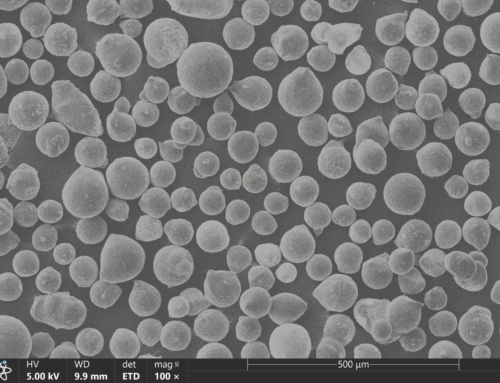
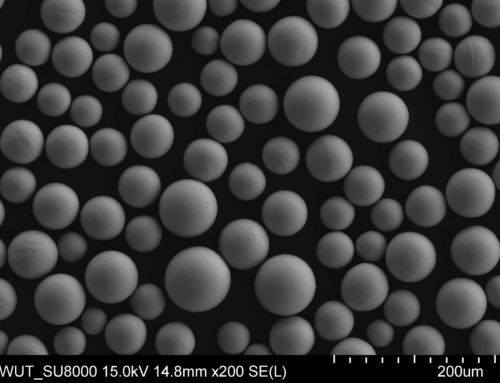
For teams that need controlled powders for R&D, metal powders produced via ultrasonic atomization are positioned as a route to high-purity, uniform particle size distributions for AM and other high-performance applications.
From density tables to AM-grade powder: rePOWDER and ultrasonic atomization
For dense metals, the real bottleneck is usually not the density ranking. It is access to repeatable, application-grade powder in a PSD that matches your process window, without committing to tens of kilograms of feedstock.
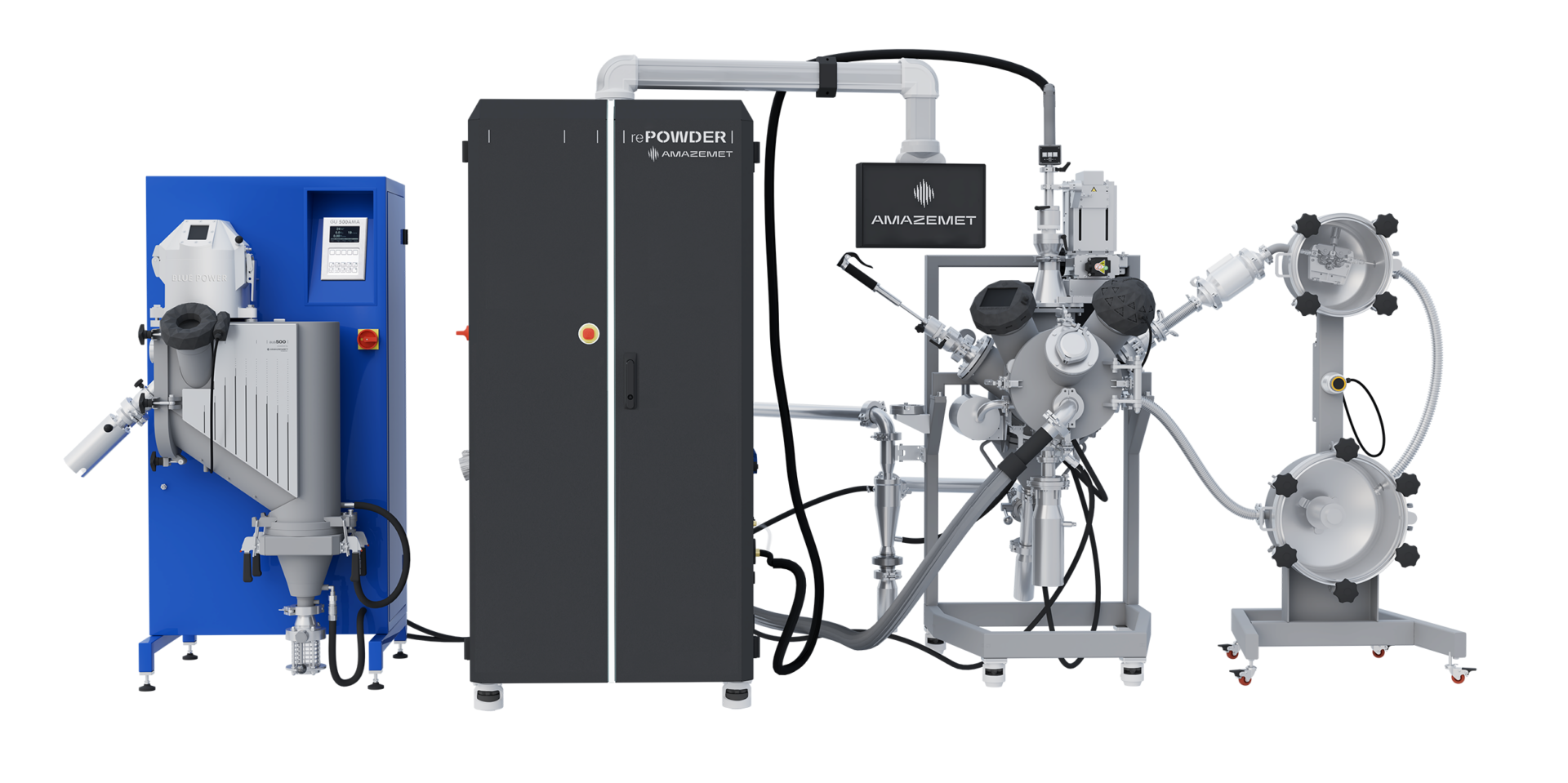
That is exactly the gap ultrasonic atomization is meant to address. In AMAZEMET’s atomization services and the rePOWDER platform, the goal is fast, controlled iteration for R&D and early qualification work:
- Low entry barrier for trials: orders can start at about 50 g of feedstock, with budgets around €1,000, which is structurally different from conventional atomization lines that require tens of kilograms to make economic sense.
- High conversion into target PSD: up to about 80% of feedstock can be converted into a PSD aligned with a chosen process, reducing the penalty of powder loss when the alloying elements are expensive.
- PSD control via ultrasonic frequency: ultrasonic atomization enables tuning of the characteristic particle size via process parameters (including frequency). In many high-density melts, the atomization physics and melt dynamics can, in practice, facilitate the generation of finer powders than is typically achievable for otherwise comparable low-density melts, assuming similar viscosity and surface-tension regimes.
- Powder quality targets engineers can use: typical performance targets include **Hall flow of ~4–5 g/s and high sphericity (d10 aspect ratio **above about 0.90), with the practical goal of stable recoating and consistent packing.
Closed-loop material economics: Powder2Powder style re-atomization can convert unused powder, scrap, chips, or failed builds back into fine powder, which matters most when your material cost dominates your experiment budget.
Important note on tungsten and tantalum scale-up
Ultrasonic atomization is a strong fit for rapid prototyping of difficult materials, including refractory and high-density systems. However, industrial-scale ultrasonic atomization of pure tungsten (W) and tantalum (Ta) is not yet feasible in practice. Their extremely high melting points and processing constraints make high-throughput, large-batch production a different problem than R&D-scale prototyping.
In other words:
- For W- and Ta-based alloys, HEAs, or small-batch trials, ultrasonic atomization can be a practical route to get powder quickly and test printability.
- For large-volume demand of pure W or pure Ta, mainstream industrial powder routes still dominate today.
| Want to qualify a dense or refractory alloy without buying 25 kg of powder? |
If your next step is to move from a density table to a build trial, start with your target PSD and the available form of your feedstock (wire, rod, scrap, chips, or failed AM parts). AMAZEMET’s rePOWDER ecosystem is designed to turn small lots into AM-grade powder fast, so you can iterate on chemistry and parameters with less cost and less material waste.
Learn more about rePOWDER, or contact the AMAZEMET team to discuss your alloy, target PSD, and feasibility.
Share this content!