Lead uses: Top Applications in Modern Industry
Lead remains in service because measurable properties solve specific problems: high density, low melting point, strong vibration damping, and established recycling. Regulations limit exposure, yet in controlled environments, the material supports shielding, energy storage, damping, and low-temperature tooling. This article outlines mainstream lead uses, then turns to lead powder and research pathways for developing new Pb alloys.
Why lead still matters
Two numbers drive many choices: 11.34 g/cm³ density and 327.5 °C melting point. Density enables compact X/γ-ray shielding and effective ballast. The low melting point simplifies casting, soldering, and fusible elements. Combined with high loss modulus for damping and stable Pb/PbO₂ electrochemistry, lead remains relevant in radiation protection, batteries, and precision equipment, provided exposure is engineered and controlled.
Core industrial lead uses
Medical imaging and radiotherapy use lead for room linings, mobile barriers, and patient-specific collimators. Nuclear facilities and industrial radiography use similar components, often encapsulated or laminated with elastomers for cleanability. In energy, lead–acid batteries support automotive SLI, UPS, and telecom backup with grid chemistries that balance corrosion, creep, and water loss. Low-melting Pb–Bi and Pb–Sn–Bi alloys enable safety plugs, thermal fuses, and temporary fixtures. Lead also serves as ballast and a damping medium in machinery and precision tooling.
From metal to powder: what changes and why it helps
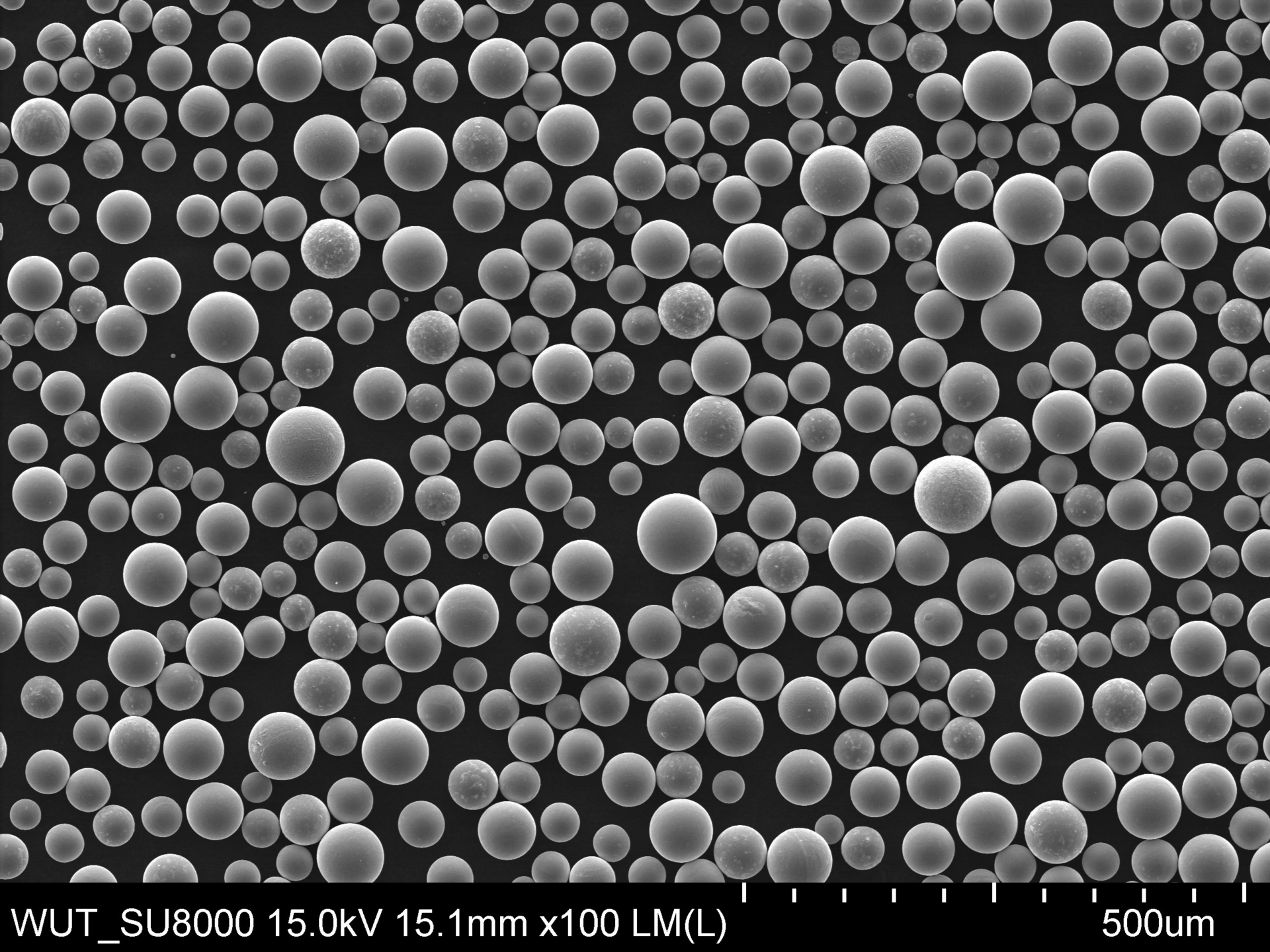
Powders unlock processes that sheet and cast stock cannot. High-loading polymer composites yield flexible shielding; paste routes print fine features; cold-spray builds dense local shields at low substrate temperatures. In research, powders shorten iteration cycles: composition and particle design can shift between experiments without rebuilding a melt line.
Where powders make sense
- Flexible shielding sheets and molded parts at very high filler loadings.
- Paste-printed or binder-jetted collimators and apertures with fine geometry.
- High-reliability Sn–Pb solder pastes in exempt applications.
- Damping inserts and lattices tuned to specific frequency bands.
- Fusible, low-temperature fixtures and soluble cores based on Pb–Bi systems.
- Electrochemical coupons for grid/alloy screening.
Lead alloys commonly encountered, in powder form
- Pb–Sb (≈1–6 % Sb): strength and creep resistance for grids and castings.
- Pb–Ca–Sn: low gassing and long life in battery grids.
- Pb–Ag (≈0.1–0.6 % Ag): selected when high-temperature corrosion of positive plates is the limiting failure mode.
- Pb–Sn: solders and legacy bearing metals.
- Pb–Bi eutectics: fusible elements and low-temperature tooling.
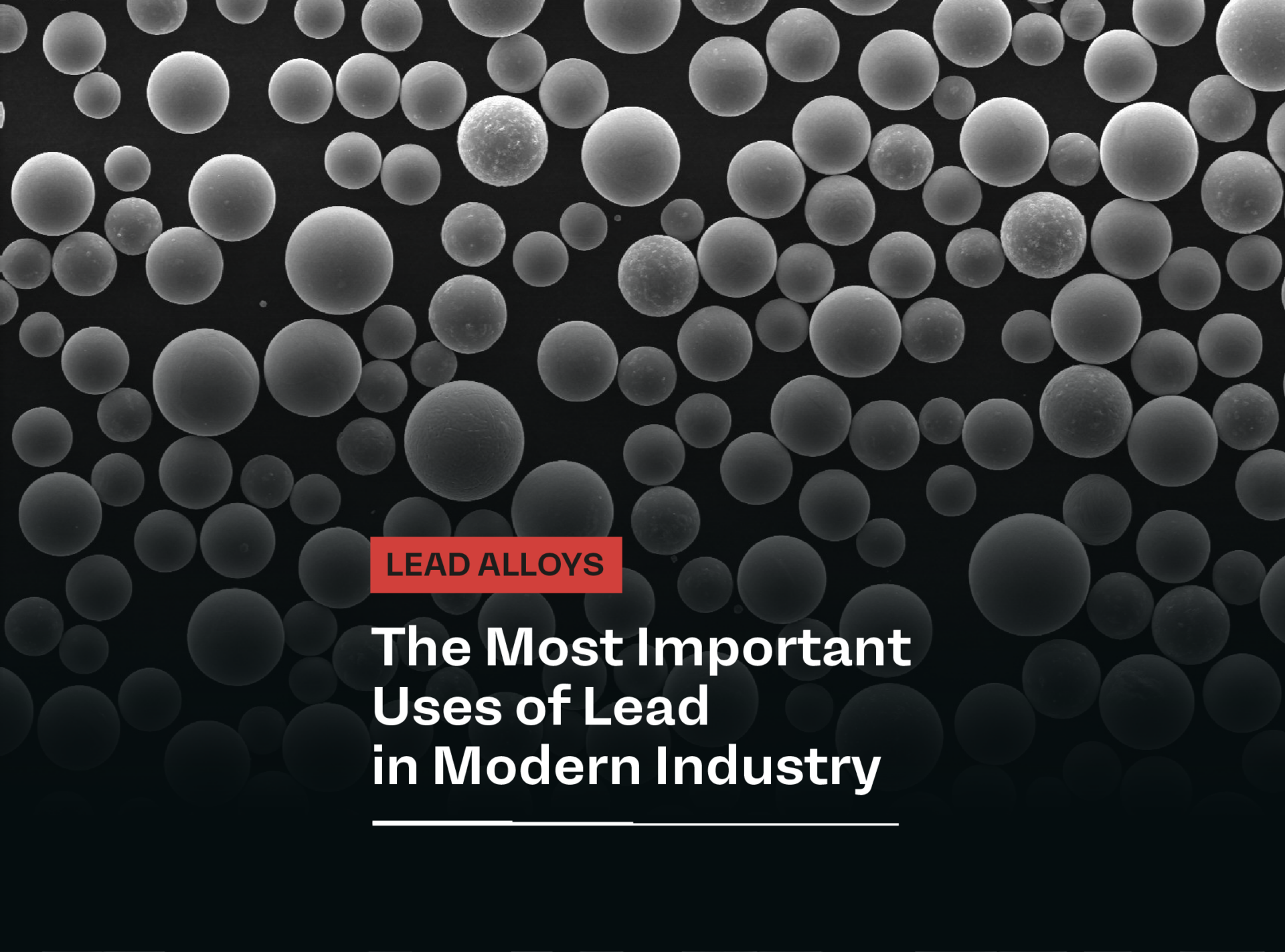
For powder work, pre-alloyed powder is preferred where surface chemistry and homogeneity matter (pastes, PM, spray, polymer compounding).
Three levers that are crucial for powder feedstock: sphericity (flow), surface oxide (wetting and sintering), and bimodality (packing vs. viscosity).
Powder processes that work with lead
Laser powder-bed fusion and high-energy DED are generally unsuitable due to vapor and fume. Practical, research-friendly routes:
- Binder jet + low-temperature densification.
Print Pb, Pb–Bi, Pb–Sn, or Pb–Sb powders. Debind at modest temperature, then densify near alloy liquidus. Finished parts are often encapsulated for clean handling. Suitable for complex collimators and small shielding blocks. - Direct-ink writing / paste extrusion.
High-solids pastes (≈50–85 vol%) form lattices or conformal features, then reflow or light sinter. Tight PSD and controlled oxide keep rheology predictable. - Cold spray (additive build-up).
Spherical Pb or Pb-alloy powders deposit dense layers at low substrate temperature. Useful for localized shielding on tools, fixtures, and housings. Surfaces are typically sealed or over-molded. - Powder metallurgy / MIM.
Pressed or molded inserts become damping elements or fusible features after low-temperature sinter or melt-bonding, depending on alloy.
Research spotlight: developing new Pb alloys with powders
Laboratories and institutes use small, controlled powder lots to explore composition–microstructure–property links and to co-design geometry and material.
Typical research aims
- Flexible shielding with defined attenuation per thickness and hardness.
- Damping metamaterials tuned to frequency bands, measured as loss factor η and transmissibility across temperature.
- Fusible tooling and soluble cores (Pb–Bi or Pb–Sn–Bi) with controlled melt-out and minimal residue.
- Positive-grid chemistries (Pb–Ca–Sn, Pb–Ag) evaluated by corrosion-layer growth and cycling at partial state of charge.
Why ultrasonic atomization is effective for lead powders
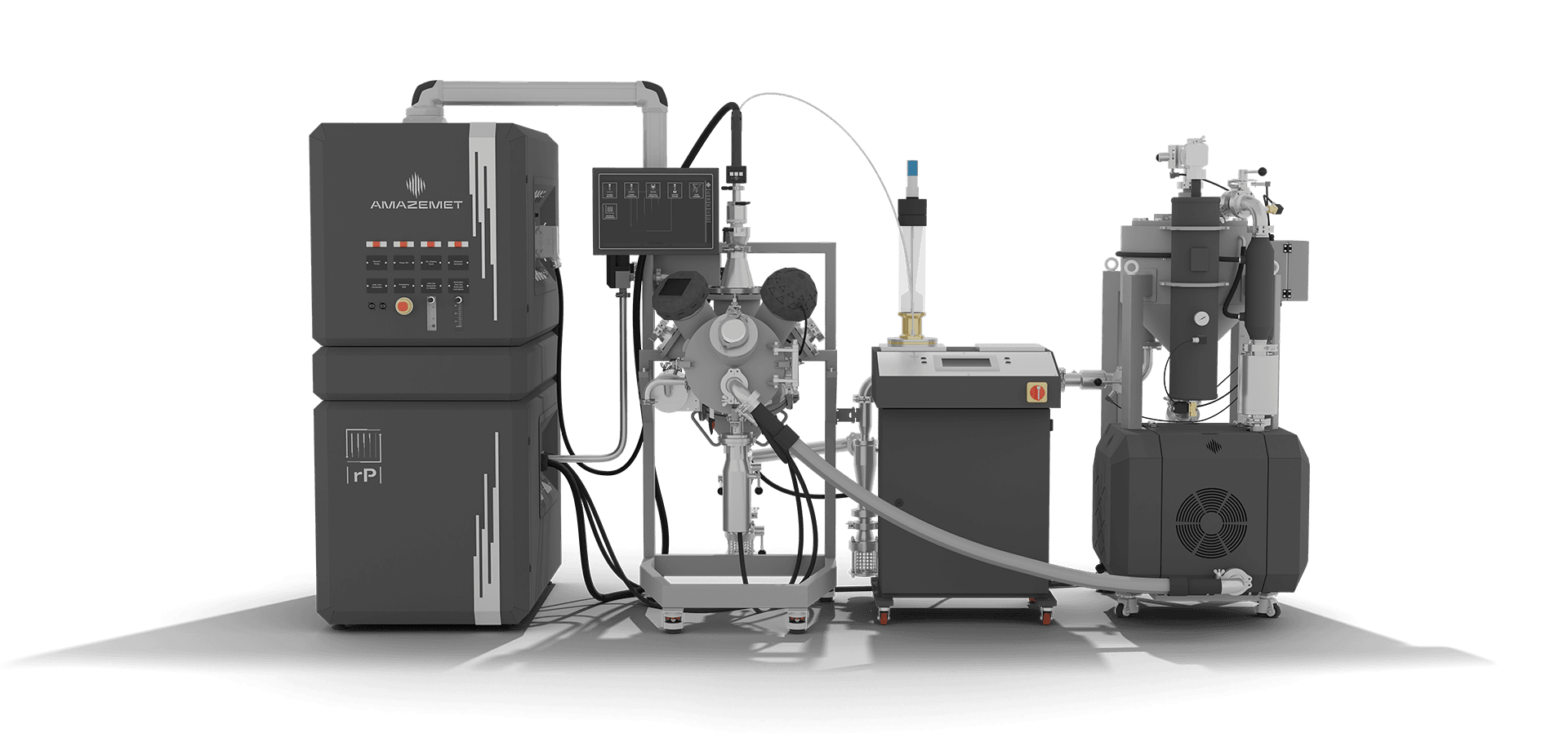
Lead’s low liquidus and oxide sensitivity favor ultrasonic atomization. Small melt charges, temperature held just above liquidus, and inert atmosphere limit oxide and fume while delivering fine, tunable PSD with high sphericity. Rapid alloy changeovers support multi-composition DoE in a single session. See Ultrasonic atomizer and Metal powders for technical overviews.
Choosing the right path with AMAZEMET
Plan the study or prototype by fixing the process route and the target properties. Provide the chemical specification of the Pb alloy and your targets for PSD (D10/D50/D90), morphology, and surface state. We will produce a controlled lot sized to your needs and supply handling notes aligned to the route (composites, binder jet, paste DIW, cold spray, PM/MIM).
If you’re looking for a partner to support research that involves Pb powders, or you want details on equipment for manufacturing custom Pb-alloy powders, contact us to discuss requirements.
Share this content!