Low volume production of superalloy powders
Platinum Group Metal (PGM) alloys have industrial applications in addition to jewelry, including in catalysts, glass manufacturing and aerospace. Even though Pt-based superalloy systems have been developed more than 20 years ago, the ultimate aim is to develop applications in industrial fields such as gas turbine engines. To justify the higher cost, platinum-based alloys can be used at temperatures 200°C higher than for nickel based superalloys.
Powder metallurgy products and coatings are also viable applications. Platinum based superalloys have been designed which can outperform nickel based superalloys, especially at very high temperatures. However, there has been little research on the influence of manufacturing processes on mechanical properties of these alloys. One such a superalloy is Pt-Al-Cr-Ru.
The platinum based superalloys are relatively difficult to cast and have limited formability, which allows powder metallurgy as a potential production route. Due to the high costs of Platinum Group Metals (PGM) alloys, their powder production has not been studied as extensively as other alloy systems. Additive manufacturing allows for cheaper manufacturing of (PGMs) in comparison with conventional methods.
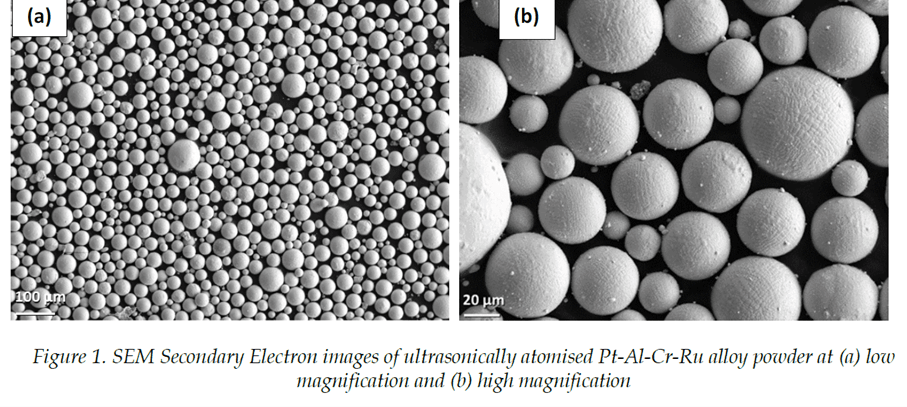
The Pt-Al-Cr-Ru system has been identified as being one of the most promising for high temperature applications. After research work on a number of different samples, the composition was optimized as Pt84-Al11-Cr3-Ru2 (at.%), which gave the best microstructure. Elemental powders of pure Pt, Al, Cr and Ru were mixed in a ratio to achieve a composition of Pt84-Al11-Cr3-Ru2 (at.%). The total mass of the combined powders was only 10g, due to the high costs of the PGMs. The powders were blended and compacted.
Dr Heinrich Möller, Chief Engineer, Mintek
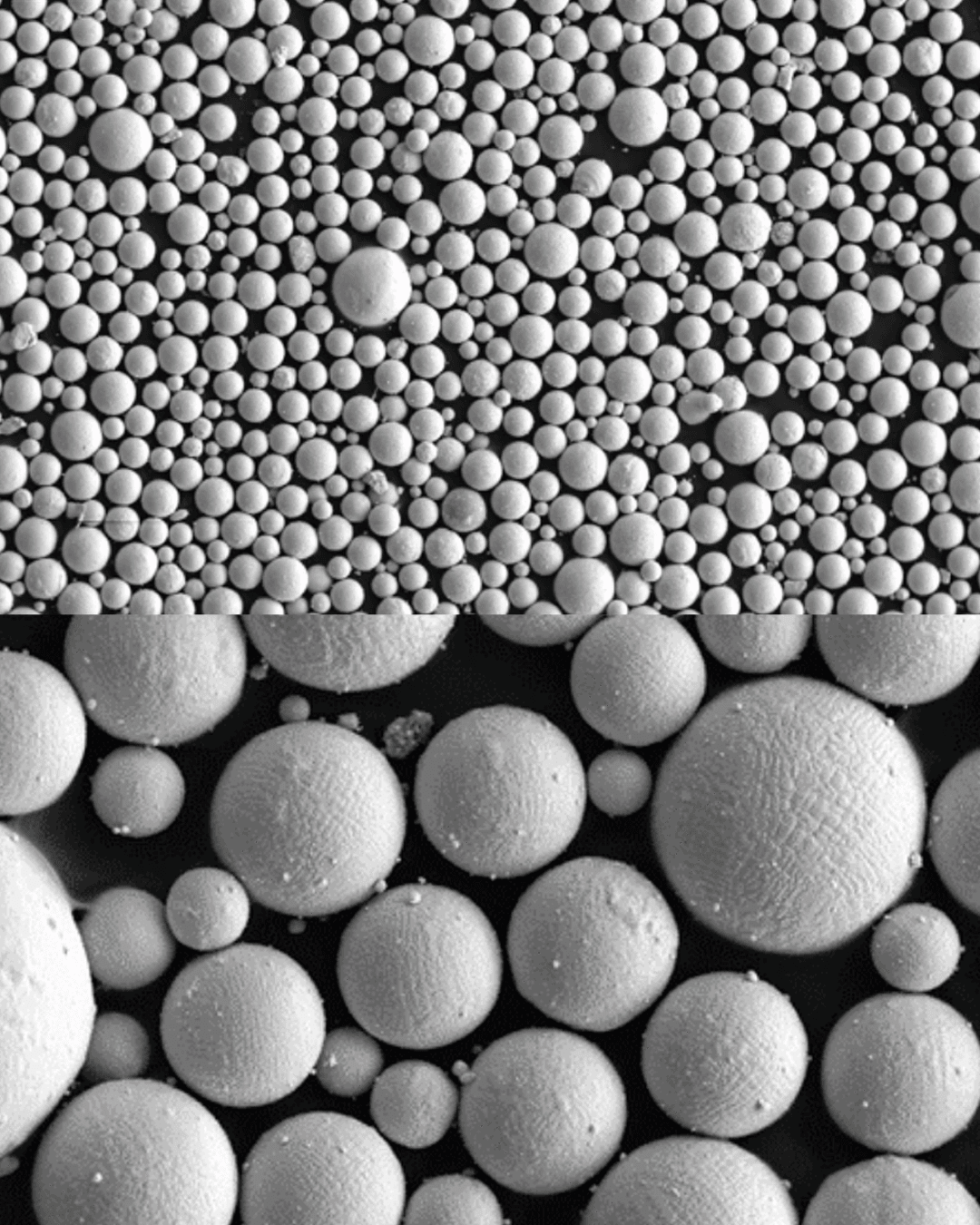
 “It can be seen that alloying had taken place during atomization, with Al, Cr and Ru distributed relatively homogenously within the Pt-based powder particles. The powders were spherical with a low number of fine satellite particles. This work shows that with use of AMAZEMET rePowder it is clearly possible to produce spherical metal powders for additive manufacturing from compacted elemental powders with even as low as ten grams of feedstock.”
Mintek (The Council for Mineral Technology) is South Africa’s national mineral research organization and one of the world’s leading technology organizations specializing in mineral processing, extractive metallurgy and related fields. Find out more about MINTEK
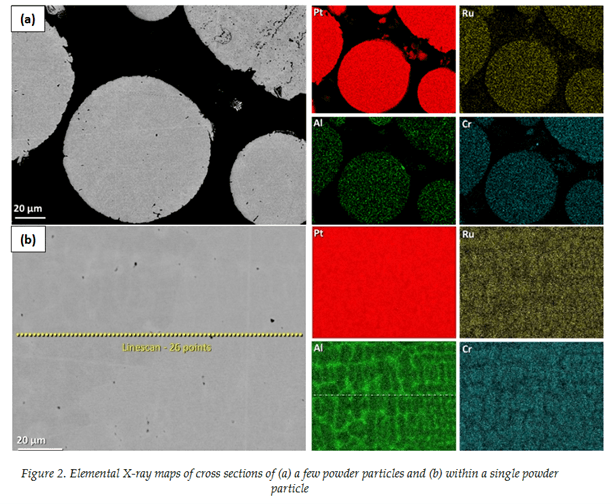
It can be seen that alloying had taken place during atomization, with Al, Cr and Ru distributed relatively homogenously within the Pt-based powder particles. The powders were spherical with a low number of fine satellite particles. This work shows that with use of AMAZEMET rePowder it is clearly possible to produce spherical metal powders for additive manufacturing from compacted elemental powders with even as low as ten grams of feedstock.
You can read more about Pt-Al-Cr-Ru superalloy powder production in this publication.
rePOWDER ultrasonic atomization platform
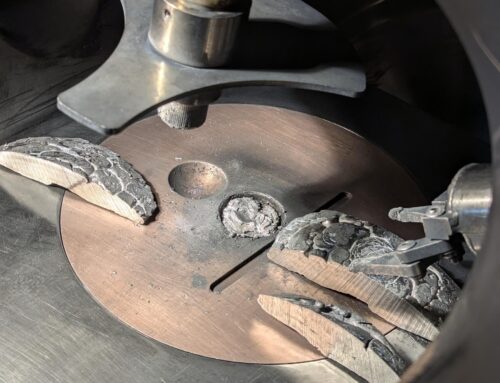
AMAZEMET rePowder was subsequently used for powder atomization. The compacted powder was melted by TIG torch onto a molybdenum alloy sonotrode and atomized using a 40 kHz frequency. The whole process was carried out in an argon atmosphere. It is known that powder manufactured using 40 kHz frequency ensures a narrow particle size distribution (PSD) range and produces powder with d 50 = 45-60 μm, which is most suitable for Laser Powder Bed Fusion (L-PBF) processes.
| Would you like to produce perfect metal powders with your superalloys?
Share this content!