

Freedom in Metal AM Develompent & Production
Unlocking the Potential of Niobium and Its Alloys
Unlocking the Potential of Niobium and Its Alloys
Niobium alloys are key enablers of high-performance for aerospace, hypersonics, and energy applications, combining exceptional heat resistance with remarkable structural properties.
RHENIUM ALLOYS
Maximizing Performance: The Versatility of Niobium-Based Alloy Systems
Introduction
Niobium (Nb) is one of the most important refractory metals in modern engineering, valued for its high melting point (2477 °C), excellent corrosion resistance, and ductility. In its pure form, niobium is used in superconductors, capacitors, and chemical equipment, but its greatest impact comes as the foundation of advanced alloys. When alloyed with elements such as hafnium, titanium, and molybdenum, niobium contributes to materials that can endure extreme environments where other metals fail.
Widely used commercial niobium-based alloys include C-103 (Nb-10Hf-1Ti), Nb-1Zr, Nb-Ti grades such as Nb-47Ti and Nb-52Ti, and Nb-3Sn.
C-103 and Nb-1Zr are valued for aerospace propulsion and hypersonic applications due to their high-temperature strength and creep resistance.
Niobium–titanium alloys (around 47–52 wt % Ti) are critical for superconducting magnets in MRI systems, particle accelerators, and fusion devices, while Nb-3Sn is another key superconducting compound used in high-field magnet systems.
Other commercially significant niobium alloys, such as Nb-Hf, Nb-Mo, and Nb-W systems, offer excellent oxidation resistance and are applied in advanced energy systems and chemical processing.
These established materials provide a solid basis for projects aiming to tailor microstructure, particle size distribution, or minor alloying additions for additive manufacturing and next-generation energy or aerospace components.
A prominent example is C-103 (Nb-10Hf-1Ti), a niobium-based alloy widely used in rocket propulsion and hypersonic structures. C-103 combines ductility with high-temperature strength, making it suitable for nozzles, combustion chambers, and space vehicle components. Beyond C-103, other niobium alloys play vital roles in aerospace superalloys, superconducting wires (NbTi, Nb3Sn), and nuclear applications. For all these applications, powder availability in tailored quantities is increasingly critical to support additive manufacturing, rapid prototyping, and experimental alloy development.
Niobium (Nb) is one of the most important refractory metals in modern engineering, valued for its high melting point (2477 °C), excellent corrosion resistance, and ductility. In its pure form, niobium is used in superconductors, capacitors, and chemical equipment, but its greatest impact comes as the foundation of advanced alloys. When alloyed with elements such as hafnium, titanium, and molybdenum, niobium contributes to materials that can endure extreme environments where other metals fail.
Widely used commercial niobium-based alloys include C-103 (Nb-10Hf-1Ti), Nb-1Zr, Nb-Ti grades such as Nb-47Ti and Nb-52Ti, and Nb-3Sn.
C-103 and Nb-1Zr are valued for aerospace propulsion and hypersonic applications due to their high-temperature strength and creep resistance.
Niobium–titanium alloys (around 47–52 wt % Ti) are critical for superconducting magnets in MRI systems, particle accelerators, and fusion devices, while Nb-3Sn is another key superconducting compound used in high-field magnet systems.
Other commercially significant niobium alloys, such as Nb-Hf, Nb-Mo, and Nb-W systems, offer excellent oxidation resistance and are applied in advanced energy systems and chemical processing.
These established materials provide a solid basis for projects aiming to tailor microstructure, particle size distribution, or minor alloying additions for additive manufacturing and next-generation energy or aerospace components.
A prominent example is C-103 (Nb-10Hf-1Ti), a niobium-based alloy widely used in rocket propulsion and hypersonic structures. C-103 combines ductility with high-temperature strength, making it suitable for nozzles, combustion chambers, and space vehicle components. Beyond C-103, other niobium alloys play vital roles in aerospace superalloys, superconducting wires (NbTi, Nb3Sn), and nuclear applications. For all these applications, powder availability in tailored quantities is increasingly critical to support additive manufacturing, rapid prototyping, and experimental alloy development.


METAL AM
The Challenge of Accessing Specialized Niobium Powders
Despite its importance, niobium remains difficult to source in the tailored powder forms needed for advanced R&D and small-batch manufacturing.
Conventional supply chains focus on bulk niobium products such as ingots, sheets, or powders intended for large-scale metallurgical use. While effective for mass production, these options fall short for researchers and innovators working on next-generation aerospace or energy materials. The main barriers include:
01
Bulk-Oriented Supply
Niobium powders are typically offered in large quantities, with high minimum order requirements that are impractical for R&D projects.
02
Limited Alloy Options
Off-the-shelf niobium powders rarely cover specialized alloys such as C-103 variants or experimental Nb-Mo and Nb-Hf compositions.
03
Long Lead Times
Custom niobium alloy powders are often produced only on request, requiring months of waiting before delivery.
These issues slow down progress in hypersonic design, additive manufacturing, and superconducting technologies, where innovation depends on fast iteration and precise material control.
These issues slow down progress in hypersonic design, additive manufacturing, and superconducting technologies, where innovation depends on fast iteration and precise material control.
AMAZEMET
Tailored Niobium Alloy Powders for Advanced Applications
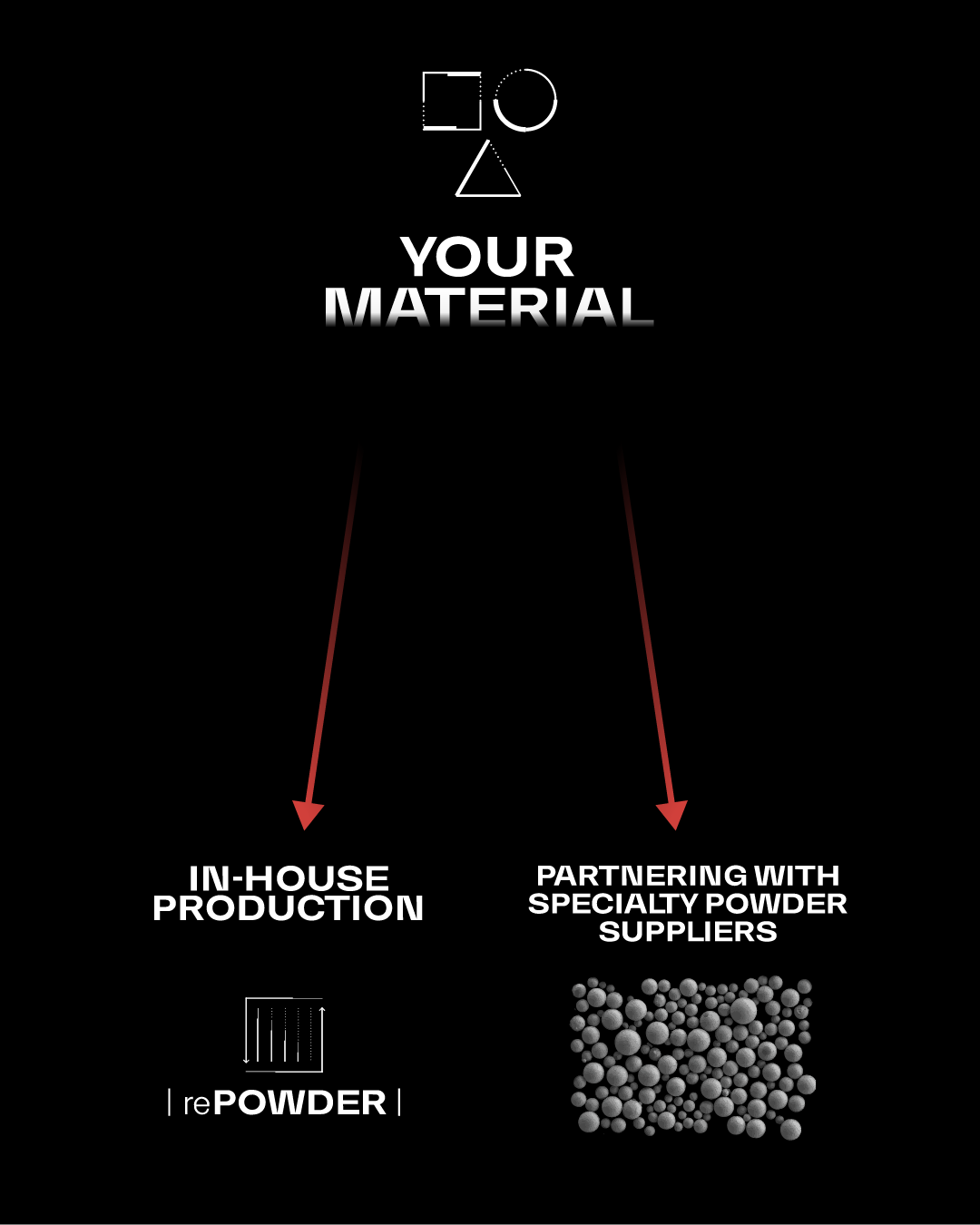
Specialty suppliers and in-house powder production enable access to the exact niobium alloys researchers need.
For projects that cannot rely on mass-produced niobium products, two practical solutions emerge:
- Specialty Powder Providers: Advanced vendors can create custom batches of niobium or Nb-based alloy powders in quantities suitable for R&D. By adjusting alloying additions, phase balance, or particle size distribution, they can meet the unique requirements of aerospace, hypersonics, or energy projects.
- In-House Atomization Systems: With technologies such as AMAZEMET’s rePOWDER, research groups and manufacturers can produce niobium powders directly on-site, gaining full control over chemistry, microstructure, and particle characteristics. This approach reduces dependency on external suppliers, shortens development cycles, and safeguards proprietary formulations.
Both pathways give engineers and scientists the flexibility to explore niobium’s full potential, from C-103 rocket alloys to novel Nb-based materials for superconductivity and high-temperature structures.
METAL POWDERS PRODUCTION
AMAZEMET: Your Partner in Niobium Powder Innovation
AMAZEMET supports aerospace, hypersonic, and energy research with small-batch niobium powders and in-house atomization solutions.
By bridging the gap between large-scale supply chains and specialized project needs, AMAZEMET accelerates the development of new niobium-based technologies.
At AMAZEMET, we recognize that niobium’s role in future technologies cannot be met with one-size-fits-all solutions. Instead, we focus on flexible, custom approaches that empower innovation:
Collaborating on
tailored powder compositions, including alloys like C-103, NbTi, or novel Nb-Hf-Mo systems.
Providing
research-scale quantities, from just a few grams for academic labs to several kilograms for pilot projects.
Ensuring
consistent powder quality, with spherical morphology and controlled chemistry ideal for additive manufacturing and advanced metallurgical processes.
AMAZEMET SERVICES & REPOWDER
AMAZEMET Services & rePOWDER: Niobium Alloy Solutions
From custom powder production to lab-scale atomization, AMAZEMET provides the tools you need to explore niobium alloys.
1. Custom Powder Production (Small Batches):
- Tailored Compositions: Create unique Nb-based alloys optimized for aerospace, superconducting, or hypersonic applications.
- Optimized Quantities: Avoid excessive purchases by ordering only what your project requires.
- Agile Delivery: Faster than traditional bulk suppliers, enabling rapid testing and iteration.

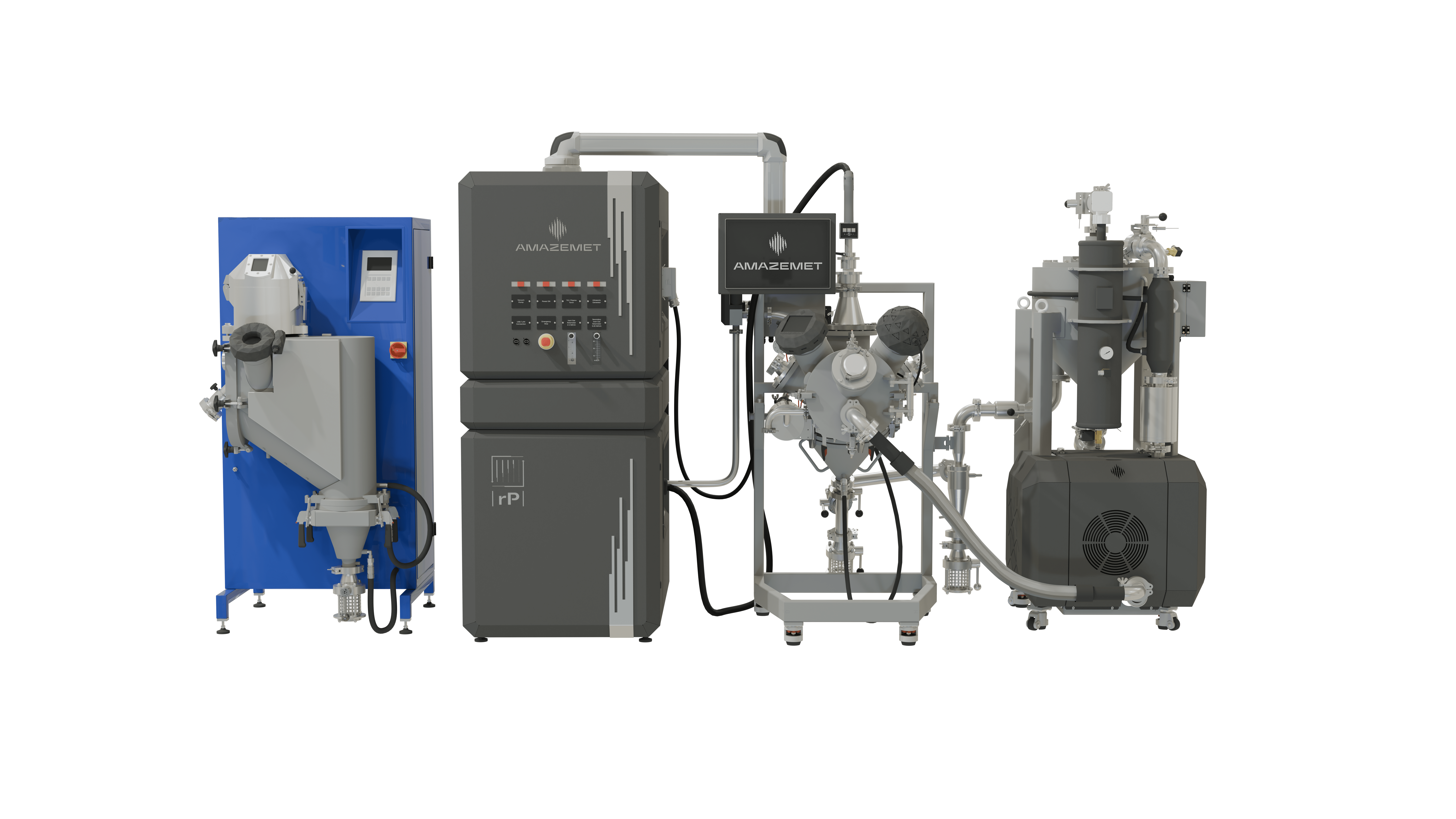
2. rePOWDER Atomizer for In-House Production
- Engineered for refractory metals like niobium.
- Full process control, including Particle Size Distribution, plasma current, and feedstock types.
- Secure production, protecting proprietary alloy designs within your own lab.
BOOST YOUR PROJECT WITH AMAZEMET
Whether you need small-batch niobium alloy powders or in-house production capabilities, AMAZEMET provides the tools to explore refractory alloys at the highest level.



