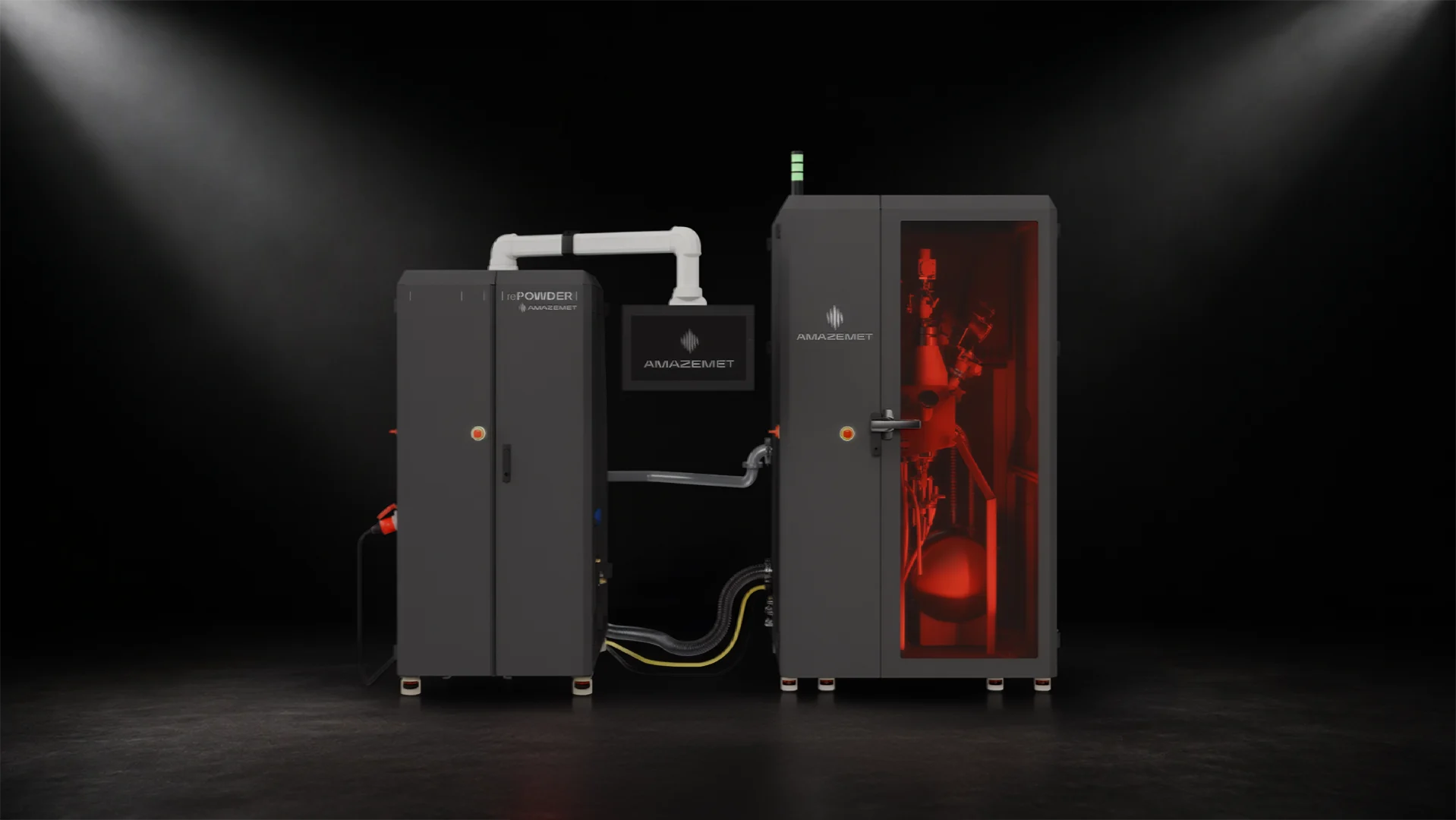
AMAZEMET is presenting a new standalone laser ultrasonic atomizer at Formnext 2026. Combining focused laser melting with ultrasonic atomization, the system provides a dedicated route to metal powder production for materials research.
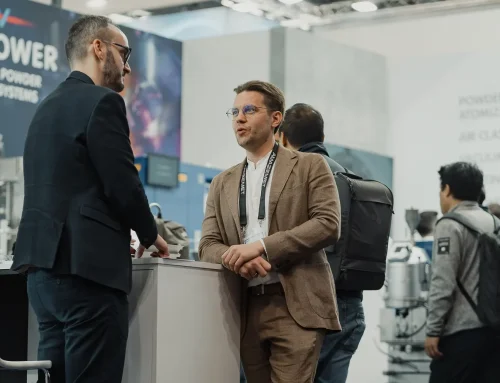
Visit Hall 12.0, Booth D42, from 17 to 20 November in Frankfurt, to discover the system and discuss its capabilities with the AMAZEMET technical and sales team.
Focused Melting Meets Ultrasonic Atomization
Laser beam focused on the metal feedstock, creates a melt pool on an ultrasonic element – sonotrode. Vibrations breaks the molten metal into droplets, which cool and solidify into powder.
The laser supplies the heat, while the ultrasonic element performs the atomization. This combination brings focused energy delivery and ultrasonic droplet formation into one standalone machine.
What Laser Melting Brings to Ultrasonic Atomization
Typically the choice of melting source affects which materials can be processed and how energy is delivered during atomization. Laser melting offers several benefits:
- A broad material range. The system supports materials ranging from aluminium which is typically atomized using induction system to high-melting-point metals which are processed using rePOWDER plasma module.
- Melting without an electrode. Laser heating avoids tungsten contamination originating from consumable electrodes and can help limit unwanted evaporation of alloying elements.
A Standalone Machine for Powder Production
Built as a standalone platform, the new atomizer brings laser melting and ultrasonic powder production into one system:
- Laser power: 3 kW.
- Cycle duration: up to 4 hours for aluminium and titanium with established process parameters.
Production rate and operating duration depend on the material and process conditions. These specifications should therefore be considered alongside the requirements of the planned experiment.
From Aluminium to Tungsten: Powder Results
Powders produced using laser-based ultrasonic atomization include molybdenum, tungsten, aluminium and Ti6Al4V. The SEM images below show particle morphology, while the corresponding particle size distributions describe the size characteristics of each sample.
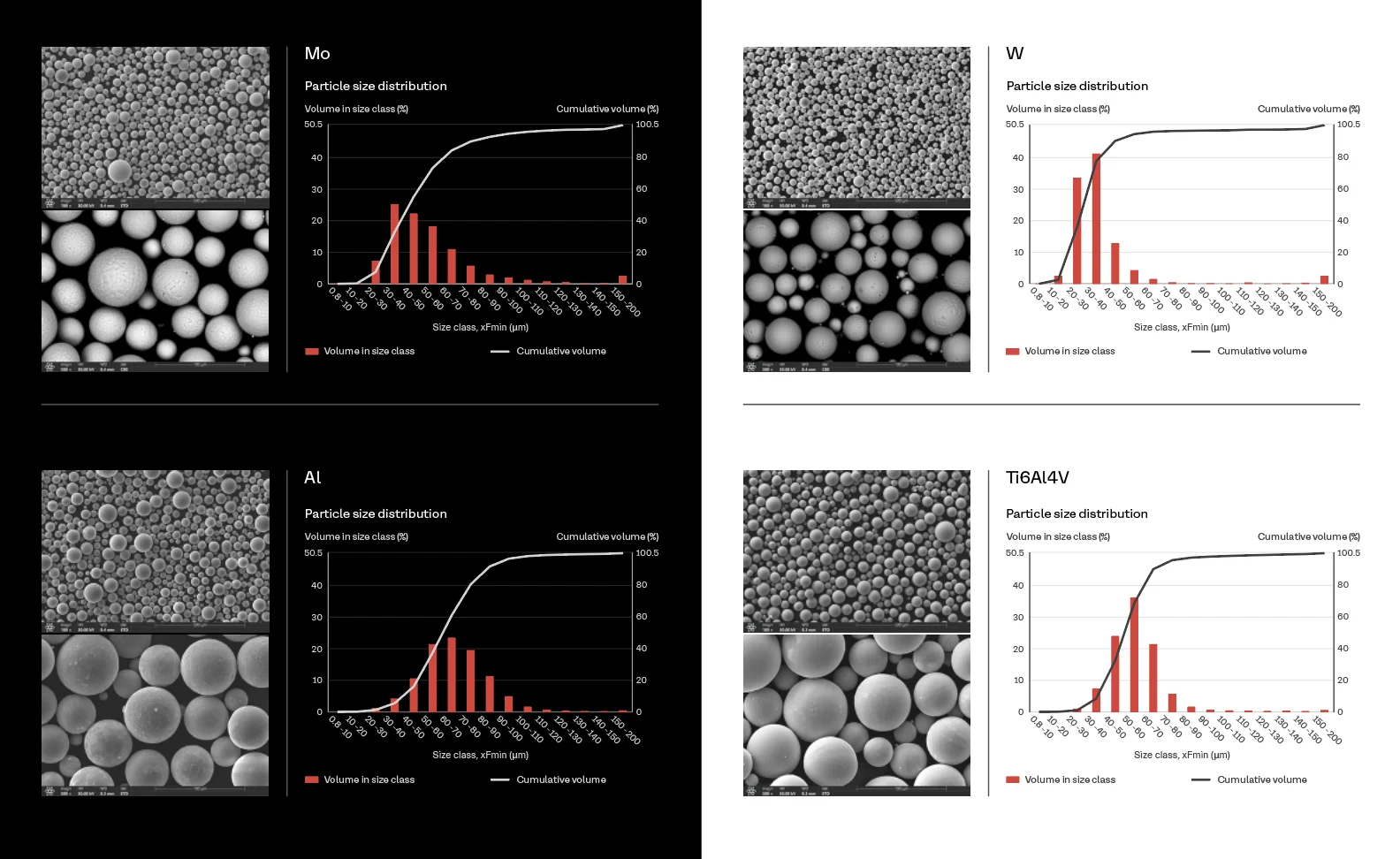
Fig. 1. SEM images and particle size distributions of molybdenum, tungsten, aluminium and Ti6Al4V powders
| Material | D10 [µm] | D50 [µm] | D90 [µm] | Apparent density [g/cm³] |
|---|---|---|---|---|
| Molybdenum, Mo | 31 | 47 | 73 | 6.17 |
| Tungsten, W | 24 | 33 | 53 | 11.55 |
| Aluminium, Al | 45 | 66 | 90 | 1.62 |
| Ti6Al4V | 41 | 55 | 72 | 2.66 |
Particle size distribution and apparent density of example powders
These values describe the individual samples shown above, rather than a guaranteed specification for every batch. Powder characteristics depend on the material and processing conditions.
Laser ultrasonic atomization opens opportunities for new research, projects and applications. AMAZEMET welcomes discussions and collaboration with teams looking to explore this field.
Discover the New Atomizer at Formnext
Meet the AMAZEMET team at Hall 12.0, Booth D42, to explore the new system and discuss your material, research goals and powder requirements. Visitors will also be able to watch ultrasonic atomization in action and speak with the technical and sales team.




Share this content!