Whether it’s inside a jet engine, a nuclear reactor, or a manufacturing line working in extreme conditions, some environments are just too hot for ordinary materials to survive. In these high-stakes scenarios, heat resistant metals step in — built to withstand high temperatures that would melt or destroy conventional metals.
But what exactly gives a metal the ability to endure such extreme temperatures? In this article, we’ll look at the science behind heat resistance, highlight some of the most heat resistant metals and metal alloys, explore exciting new alloy families like RHEAs, and explain why powder-based processing is becoming crucial for developing the materials of tomorrow.
Understanding Heat Resistant Properties: What Makes a Metal Withstand High Heat?
A heat resistant metal isn’t just about having a high melting point, although that helps. The key heat resistance properties are its ability to retain its strength and structure when subjected to long-term high temperature exposure and withstand extreme temperatures without failing.
The best performers tend to have:
- Very high melting points
- Strong atomic bonds that hold the structure together
- Low atomic diffusion rates, which help resist creep (slow deformation over time)
- Excellent oxidation resistance and corrosion resistance, especially in aggressive environments
- Durability against thermal fatigue, avoiding cracking or weakening over repeated cycles of heat stress
While a few pure metals check some of these boxes, most real-world high temperature applications demand engineered metal alloys that combine multiple beneficial traits.
The World’s Most Heat Resistant Metals
If we go by melting point alone, five elements stand out:
1. Tungsten (W) – 3422 °C
The ultimate high-temperature metal. Used in rocket nozzles, space probes, and other high temperature applications like industrial furnaces.
2. Rhenium (Re) – 3186 °C
Enhances high temperature strength in nickel based alloys and superalloys. A go-to for turbine blades.
3. Tantalum (Ta) – 3017 °C
Highly stable, with excellent corrosion resistance. Found in nuclear systems, tantalum capacitors and other electronic components, and surgical tools.
4. Molybdenum (Mo) – 2623 °C
Affordable, tough, and versatile — often used as a base metal for structural alloys.
5. Niobium (Nb) – 2477 °C
Ductile and oxidation-resistant, with key roles in superconductors and aerospace alloys.
These metals rarely work in pure elemental form. Their real value shines when used as alloying elements, creating high-performance heat resistant materials that balance thermal strength, processability, and cost.
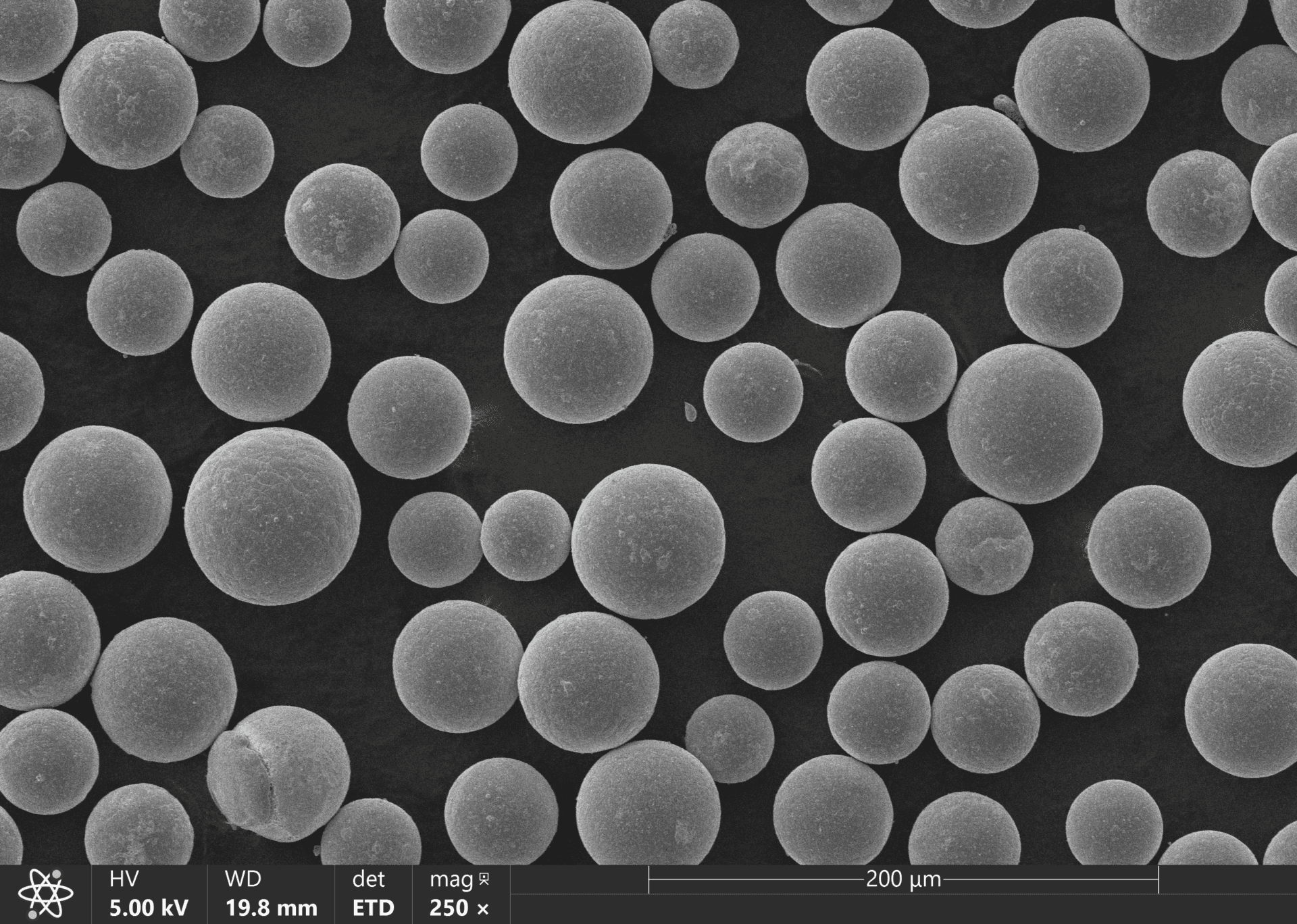
Rhenium alloys
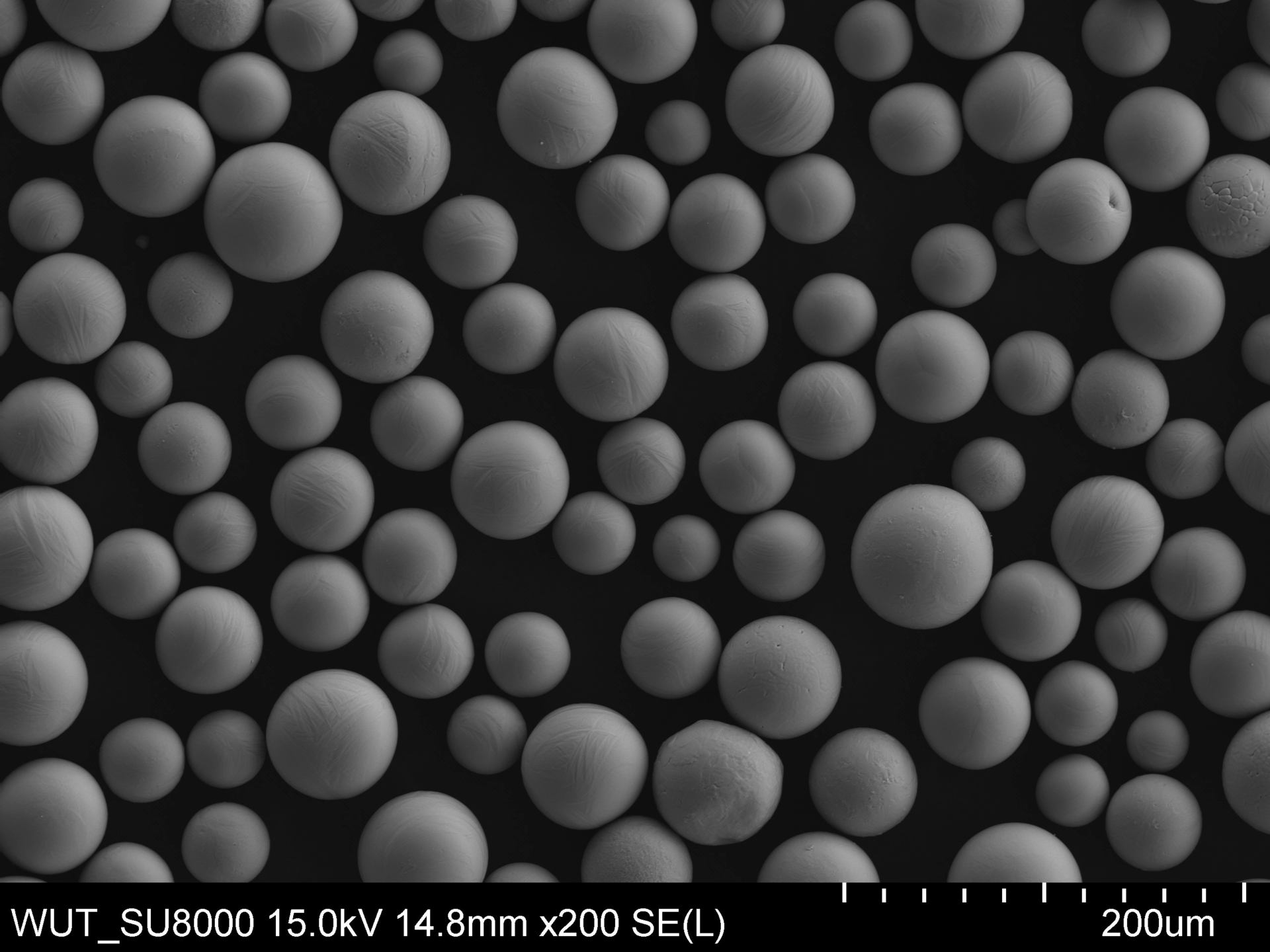
Tantalum alloys
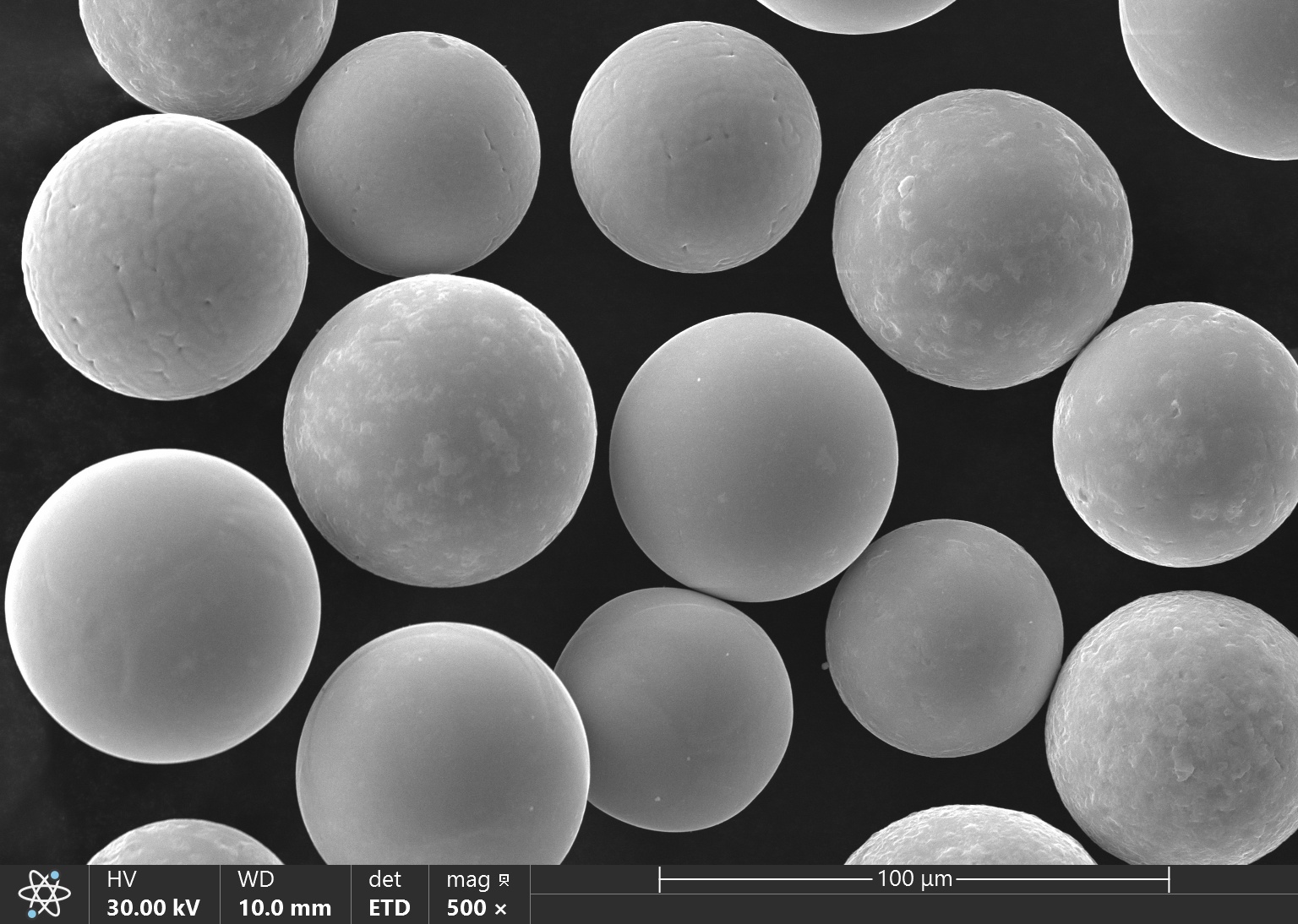
Molybdenum alloys
High Temperature Alloys for Demanding Industrial Applications
In high temperature environments, it’s not enough for a material to survive the heat — it also needs to handle mechanical loads, resist oxidation, and perform reliably for thousands of hours.
Some of the most widely used high temperature alloys systems include:
- Nickel alloys and superalloys (like Inconel® and Rene®).
Found in turbines, jet engines, and power generation systems, known for its exceptional creep resistance and oxidation stability. - Cobalt-based corrosion resistant alloys.
Resistant to hot corrosion and thermal fatigue, ideal for static parts in gas turbines. - Refractory metal-based alloys.
Blending Mo, Re, Ta, Nb with structural metals like Ni or Fe, used in aerospace, plasma-facing components, and heat shields.
These materials are often developed in powder form to support advanced manufacturing techniques. But producing powders from such high-melting and reactive elements poses a unique challenge.
RHEAs and RMEAs: A New Class of Extreme Materials
One of the most promising frontiers in this field is the rise of Refractory High-Entropy Alloys (RHEAs) and Refractory Medium-Entropy Alloys (RMEAs). Instead of relying on a single dominant element, these alloys use several refractory metals in roughly equal amounts, creating high-entropy solid solutions that deliver surprising performance.
Why researchers are excited:
- Sluggish diffusion, which means better creep resistance
- Stable microstructures at elevated temperatures above 1200 °C
- Customizable oxidation resistance, tuned by choice of elements
- High strength-to-weight ratios, offering potential for lightweight thermal structures
These alloys often include combinations of Ti, Zr, Nb, Mo, Ta, Hf, and W, and are being explored for:
- Hypersonic aircraft structures
- Fusion and fission reactor components
- Next-generation turbine and propulsion systems
However, their adoption remains limited by how difficult they are to process — especially in powder form, where controlling composition and avoiding contamination are critical.
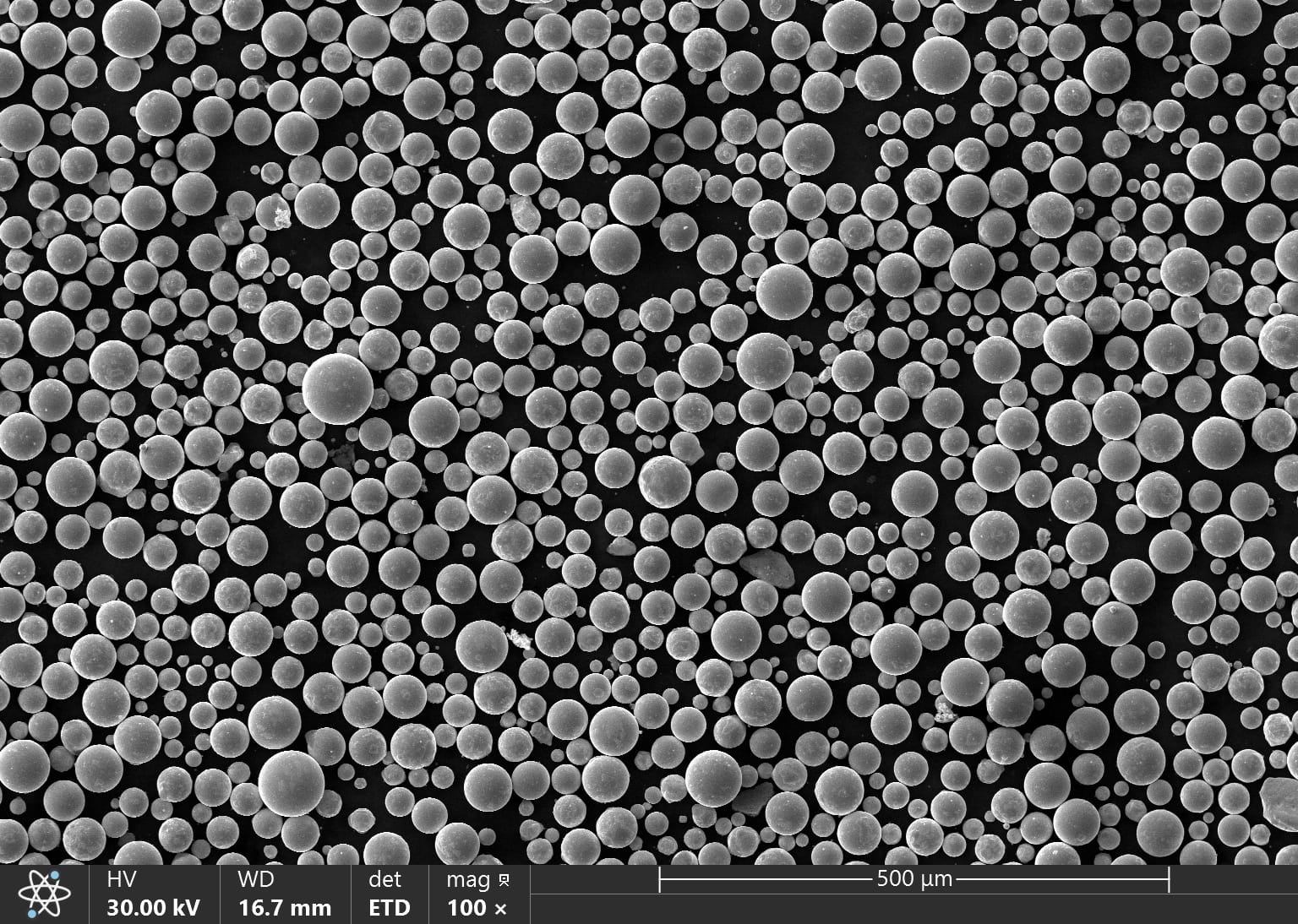
Refractory HEA
Why Powder-Based Processing Is a Key Enabler
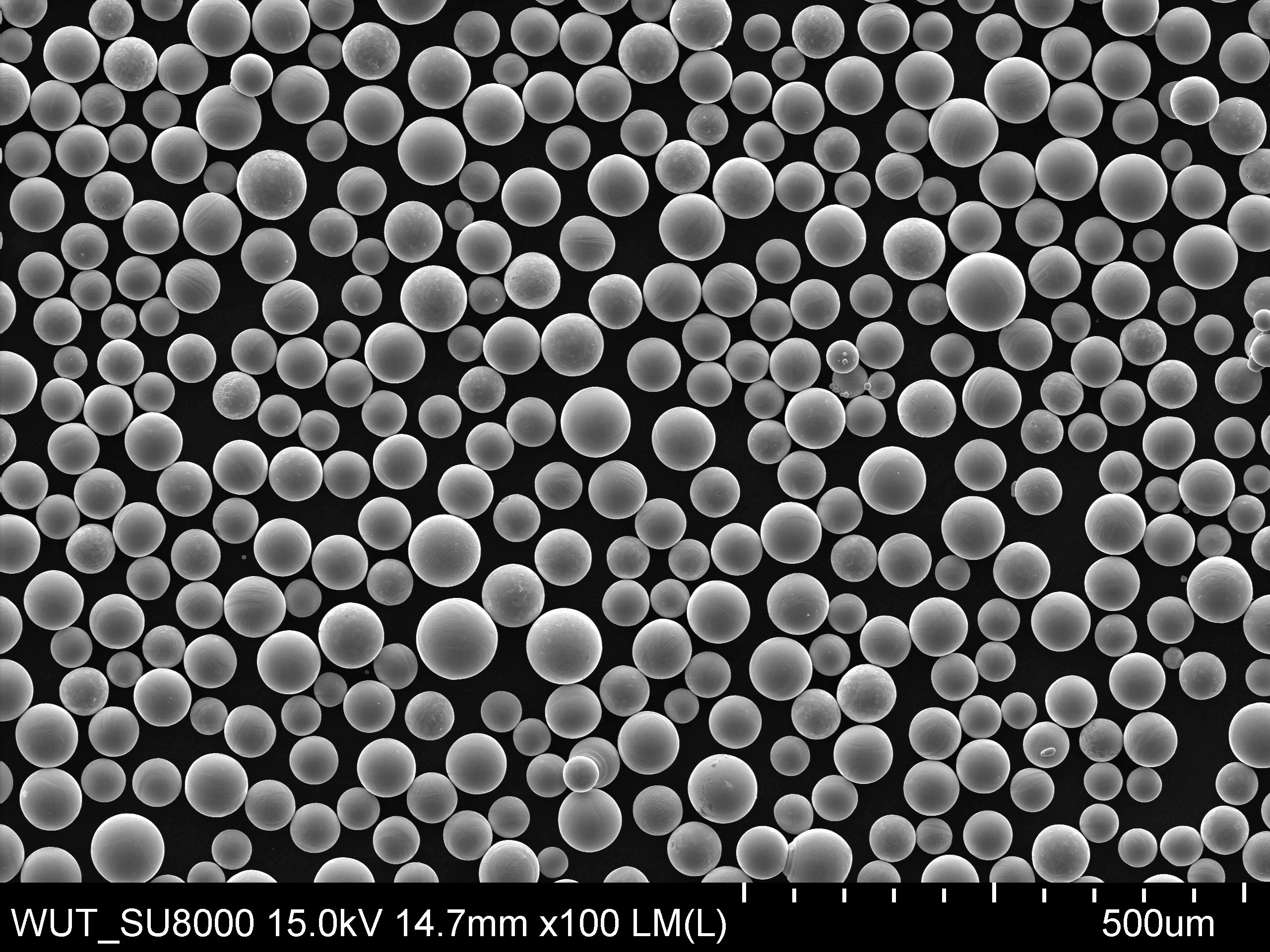
Today’s most advanced heat resistant alloys often begin their life in powder form. This opens the door to precise control over composition, microstructure, and final properties.
Technologies like:
- Additive manufacturing (AM)
- Spark plasma sintering (SPS)
- Hot isostatic pressing (HIP)
allow researchers to create small test batches of customized and designed alloys, gradient materials, or layered composites that would be difficult or impossible to make by casting or forging.
For experimental alloys like RHEAs, powder-based processing offers the flexibility needed for rapid iteration, tailoring compositions, refining structures, and meeting the performance needed for certain applications.
AMAZEMET’s Role: Small-Batch Powders for Big Ideas
At AMAZEMET, we specialize in helping researchers bring their alloy concepts to life — one small batch at a time.
Using our proprietary ultrasonic metal atomization technology, we support R&D teams working with:
- Pre-alloyed or mixed elemental feedstocks, even those with melting points up to 3000 °C
- Refractory based and experimental high-temp alloying systems
- Modified high performance Ni and Co based alloys
- Flexible, small-scale powder runs that suit feasibility studies and early-stage development
If you’re developing new alloys or testing high-temp performance, we’re ready to help with custom powder production tailored to your research needs or setting up your own laboratory-scale materials development platform with the capability to alloy and atomize new compositions.
Conclusions
As we push deeper into extreme engineering environments, the need for heat-resistant metals and advanced metal alloys will only grow. Whether it’s flying faster, generating cleaner energy, or manufacturing more efficiently, progress depends on materials that can take the heat and maintain their structural integrity.
Breakthroughs are coming not from single elements, but from tailored alloy systems, enabled by smart, flexible processing methods.
Need help transforming your idea into a research-ready metal powder? Let’s talk.
Share this content!