Titanium is one of the most recognized and versatile engineering metals of our time. As a metallic element classified among the transition metals, titanium is notable for its natural occurrence, remarkable corrosion resistance, high strength-to-density ratio, and biocompatibility, making it a preferred choice for demanding industrial and engineering. Known for its outstanding corrosion resistance, exceptional strength-to-weight ratio, and biocompatibility, it has found widespread use across a range of industries — from aerospace to biomedical engineering. In this article, we explore the most common uses of titanium, its unique properties, and how it is being adopted in modern material development, with particular attention to the titanium industry and its role in advancing applications and technologies, including its role in additive manufacturing and powder metallurgy.
Common Titanium Uses Across Industries
Despite being more expensive than traditional metals like steel or aluminum, titanium’s unique combination of strength, low density, and chemical stability justifies its use in high-performance applications. Titanium alloy and unalloyed titanium are valued as structural metals across many industries due to their superior properties compared to other metals. Most common uses for titanium today are:
- Aviation and Aerospace industry
The aerospace industry relies heavily on titanium for its excellent mechanical properties, fatigue resistance at both ambient and elevated temperatures, and high strength-to-weight ratio, making it essential for structural integrity in demanding applications.
- Airframe structures and fasteners
- Jet engine components
- Aircraft engines, where titanium alloys are used extensively for their ability to maintain structural integrity under high stress and temperature
- Spacecraft modules and protective shielding
Titanium’s use in the aerospace industry ensures structural integrity and performance in critical components, enabling lighter, more durable, and reliable aircraft.
- Biomedical Applications
Titanium is a leading material for medical implants due to its compatibility with the human body, biocompatibility, and resistance to corrosion in body fluids. Its ability to integrate with bone and support long-term function makes it the go-to material for:
- Orthopedic implants (e.g., hip and knee replacements)
- Dental implants and instruments
- Prosthetic components
- Surgical instruments, which benefit from titanium alloy’s strength, corrosion resistance, and sterilization suitability
- Medical devices, including cardiovascular devices, stents, heart valves, pacemakers, and defibrillators
Titanium’s biocompatibility with the human body and its role in medical devices and implants have significantly improved patient outcomes and advanced biomedical engineering.
It is worth noting, that AMAZEMET support research into titanium-based alloys for biomedical purposes, especially in case of lattice structure surface finishing and powder removal.
- Chemical and Marine Industry
Titanium is widely used in corrosive environments, such as those found in the chemical industry and seawater systems, due to its exceptional corrosion resistance. Applications include:
- Heat exchangers and condensers
- Desalination plants
- Chemical processing vessels
The material’s long-term stability in chloride-containing, harsh environments helps extend equipment life, reduce maintenance and lower replacement costs.
- Consumer Products and Design
Titanium’s unique aesthetic properties and light weight have led to its use in:
- High-end watches and eyeglass frames
- Sporting equipment (golf clubs, bicycles)
- Premium consumer electronics
- Design-oriented products that take advantage of the metal’s attractive color, which results from its oxide film
These uses for titanium are largely limited by cost but remain popular in high-value, design-oriented products. Compared to stainless steel and other metals, titanium alloy and unalloyed titanium offer superior light weight, strength, and corrosion resistance, making them highly desirable as structural metals in both functional and aesthetic applications.

Aerospace & Aviation

Biomedical Applications

Chemical & Marine Industry

Consumer Products and Design
Titanium in Powder Metallurgy and Additive Manufacturing
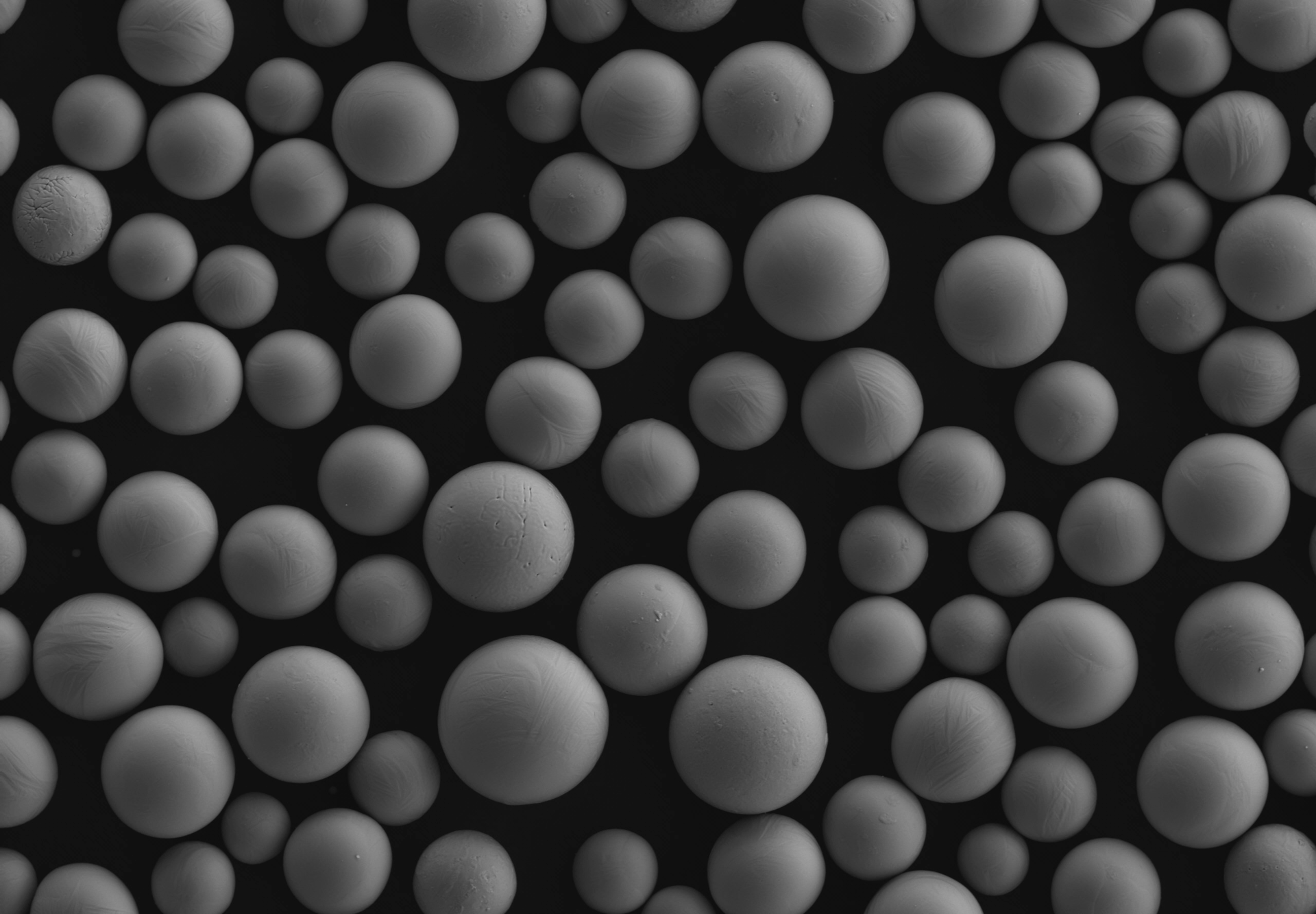
As powder metallurgy and 3D printing technologies advance, titanium powders are becoming increasingly important for producing complex, lightweight, and high-performance components. Advanced additive manufacturing techniques, such as laser and electron beam melting, enable the production of near-net-shape titanium parts with tailored microstructures and properties for demanding industrial applications.
Manufacturing processes for titanium must account for its low thermal conductivity, which can lead to heat buildup and potential thermal damage during machining. Additionally, chemical reactions, such as oxidation and diffusion, occur during processing and can affect the surface properties and integrity of titanium components.
These factors, along with the importance of tensile strength in industrial applications, make titanium a critical material for sectors such as aerospace, biomedical, and chemical industries.
Titanium Powders for Advanced Manufacturing
In additive manufacturing, especially Laser Powder Bed Fusion (LPBF) and Electron Beam Melting (EBM), Titanium powder is used to produce parts with near-net shape and excellent mechanical properties.
High purity titanium metal is especially important in advanced manufacturing, where its superior properties are critical for high-performance applications.
Titanium metal in powder form is also utilized for specialized applications requiring unique combinations of strength, lightness, and biocompatibility.
Key advantages of titanium powders in AM:
- High strength-to-weight ratio
- Good corrosion resistance even in as-build state, due in part to the formation of a stable oxide layer (titanium oxide or titanium dioxide) on the powder surface, which acts as a protectiive barrier against corrosion and enhances biocompatibility.
- Biocompatibility for research into impants, supported by the presence of titanium dioxide and titanium oxide layers that promote cell adhesion and osseointegration
- Suitability for high-performance industrial parts
These properties provide significant advantages for titanium powders in addtive manufacturing, making them ideal for demanding biomedical and industrial applications.
For these applications, spherical particle morphology and tight size distribution are essential – this is where ultrasonic atomization comes in.
Role of Ultrasonic Atomization in Titanium Powder Production
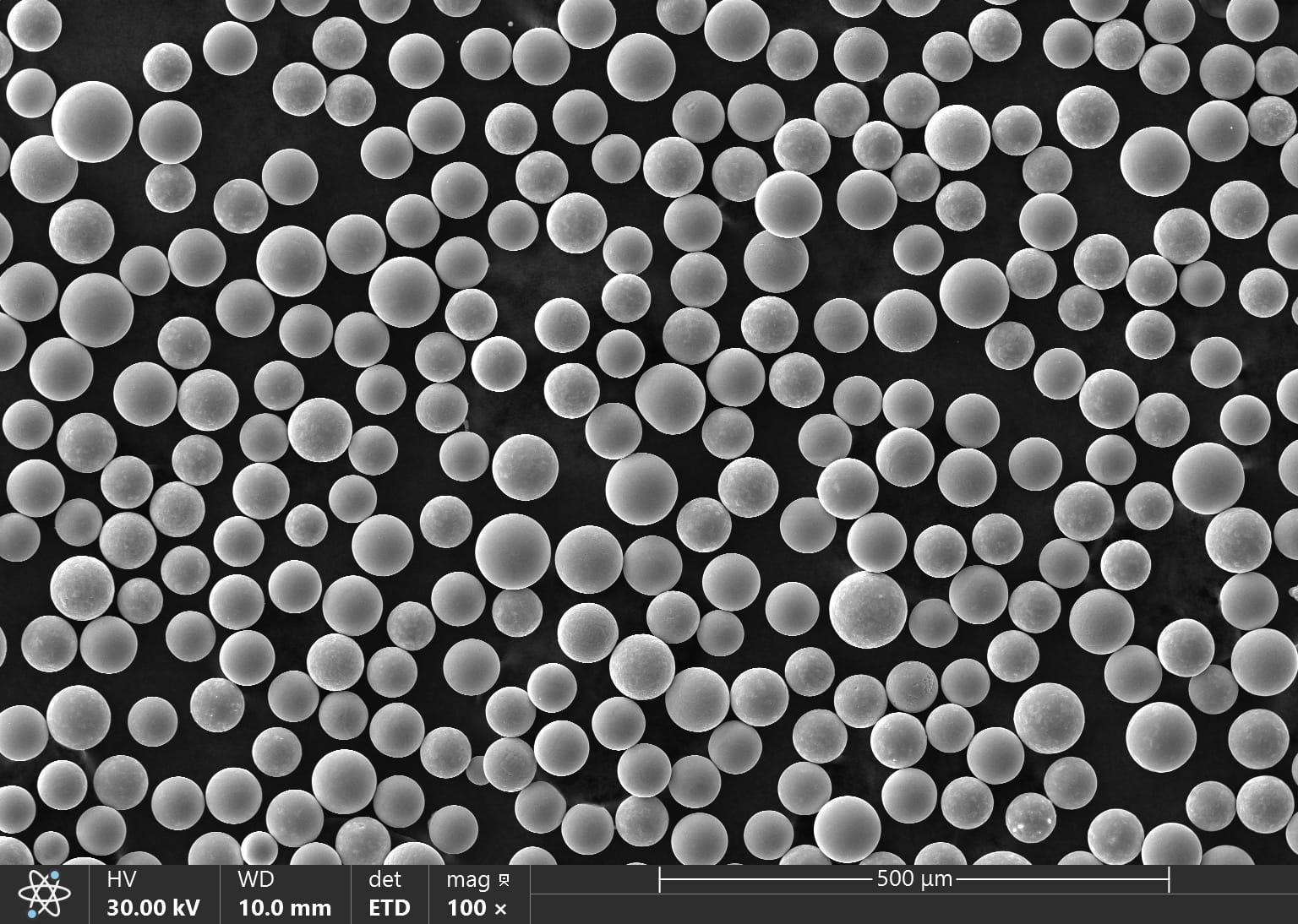
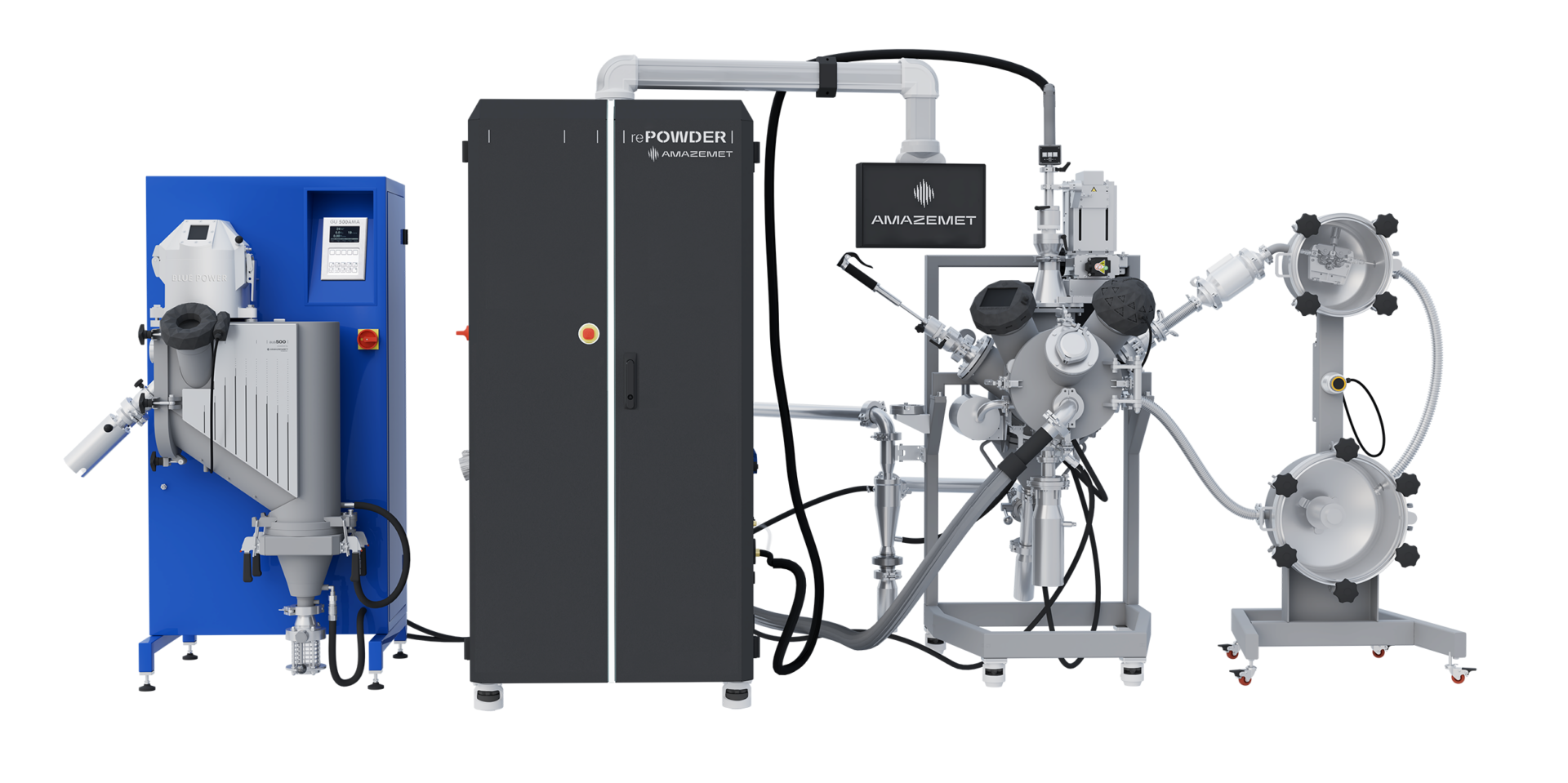
Producing high-quality titanium powders can be challenging due to titanium’s reactivity and high melting point. Traditionally, titanium sponge is produced from titanium ores through chlorination to form titanium tetrachloride, which is then reduced by magnesium metal to obtain metallic titanium. Using an ultrasonic atomizer, it is possible to generate highly spherical, flowable titanium powders from wire or recycled feedstock.
This technology allows for:
- Fine-tuning of powder size distribution by changing the frequency of the ultrasounds
- Improved flowability by reducing very fine particles responsible also for flammability issues
- Tailoring of alloy composition for research purposes
AMAZEMET offers in-house ultrasonic atomization services and supports clients working with custom titanium powders — whether for prototyping, material research, or feasibility studies.

Specialized Titanium Alloys for Demanding Applications
Beyond commercially pure titanium (Grade 2) and the widely used Ti-6Al-4V (Grade 5), researchers are increasingly exploring beta-titanium alloys for biomedical applications as well as titanium aluminides and other intermetallics for high-temperature and lightweight structural applications. The selection and performance of these alloys are strongly influenced by their chemical properties, such as oxidation behavior and corrosion resistance.
Beta-titanium alloys offer:
- High strength with excellent formability
- Superior corrosion resistance
- Tailorable elastic modulus for biomedical and structural applications
Beta alloys are predominantly composed of the β-phase microstructure, which imparts greater ductility and formability compared to alpha beta alloys. In contrast, alpha beta alloys contain a balanced mixture of both alpha and beta phases, providing a combination of strength and toughness that is widely used in aerospace and biomedical fields.
These alloys are particularly attractive for orthopedic implants, spring components, and advanced aerospace structures requiring a balance between strength and ductility.
For researchers interested in beta-titanium alloys, AMAZEMET supports the development and ultrasonic atomization of custom compositions, enabling the production of powders optimized for additive manufacturing and powder metallurgy research. Beta-titanium alloys page coming soon.
Titanium aluminides offer:
- Improved creep resistance
- Lower density than superalloys
- Excellent oxidation resistance at high temperatures
These materials are of particular interest in aerospace turbine components and automotive exhaust systems. Compared to refractory metals, which are known for their exceptional high-temperature performance but are difficult to process, titanium alloys provide a more practical alternative for many high-heat applications.
For researchers interested in such alloys, AMAZEMET can provide support in developing and atomizing custom titanium aluminides, especially in small-batch, lab-scale formats.
Titanium alloys are also valued for their corrosion resistance, which is primarily due to the formation of a stable oxide layer on the surface. This oxide layer acts as a barrier, protecting the underlying metal from environmental attack and degradation.
Is Titanium the Right Material for Your Application?
With such a broad range of titanium uses, this material offers significant potential in state-of-the art engineering and advanced research. Its performance, however, depends on the specific requirements of each application — from biomedical implants to aerospace structures, and from load-bearing components to functional materials.
At AMAZEMET, we help researchers and engineers explore this potential by offering:
- In-house powder capabilities of power production with rePOWDER ultrasonic atomizer,
- Tailored titanium powder production via ultrasonic atomization,
- Support in developing custom titanium alloys, including intermetallics,
- Feasibility studies and prototyping for AM and PM applications,
Whether you’re working on new implant research, heat-resistant engine components, or AM process development, our team is here to assist.
Interested in taking the next step?
Explore how AMAZEMET’s technology can support your research with customized titanium solutions.
Share this content!