Metal powders are the foundation of many advanced manufacturing technologies. These include Additive Manufacturing (AM), Metal Injection Molding (MIM), Thermal or Cold Spraying, and the broader field of powder metal manufacturing which encompasses traditional Powder Metallurgy (PM). Powder-based processes, such as powder metallurgy and additive manufacturing, produce fewer metal chips and reduce waste compared to traditional machining methods, offering significant environmental and efficiency benefits. Producing these powders with consistent shape, size, and purity is essential to ensuring the quality of the final components. But how are these powders actually made?
There are several different methods to produce metal powder, each with its own benefits and limitations. In this article, we’ll explore the most common powder production techniques and take a closer look at ultrasonic atomization, a versatile method increasingly used in research and small-scale industrial applications. We’ll also examine what types of metals and alloys can be atomized using this technology and how AMAZEMET integrates it into its offering.
Introduction to Metal Powders
Metal powders are essential materials across a wide range of industries, from aerospace and automotive to medical devices and electronics. The production of metal powders is a sophisticated process that takes into account factors such as chemical composition, particle size, and powder morphology, all of which influence the final properties of the manufactured part.
There are several established methods for producing metal powders. Each technique yields powders with distinct characteristics, such as particle shape, size distribution, and purity, making them suitable for specific applications. For example, gas atomization is often used to create highly spherical powders ideal for additive manufacturing, while water atomization is preferred for producing powders used in structural applications. Understanding the nuances of each process is crucial for selecting the right powder for a given application, whether in 3D printing, powder metallurgy, or advanced manufacturing.
Powder Metallurgy: The Foundation of Metal Powder Applications
Powder metallurgy is a versatile manufacturing process that transforms metal powders into finished products with complex shapes and tailored properties. The process typically involves compacting metal powders into a desired form, followed by sintering at elevated temperatures to bond the particles together. Unlike traditional machining, which removes material from a solid block, powder metallurgy minimizes waste and allows for precise control over the final component’s microstructure and properties.
This approach is particularly advantageous when working with refractory metals, alloy systems, and materials that are difficult or costly to machine using conventional methods. Powder metallurgy enables the production of components with enhanced corrosion resistance, high temperature stability, and unique mechanical properties. The choice of metal powders—ranging from ferrous and non-ferrous metals to advanced alloys—depends on the specific requirements of the application, such as strength, durability, and resistance to harsh environments. As a result, powder metallurgy has become a cornerstone technology in industries seeking efficient, high-performance solutions for complex metal parts.
How to Make Metal Powder: An Overview of Powder Manufacturing Methods
There are four main categories of metal powder production technologies: mechanical, chemical, gas-based, and ultrasonic. Each is suited to different material types, particle shapes, and production scales. Making metal powder is a manufacturing process that requires careful selection of the appropriate method based on the type of metal and the desired properties of the final product. Each is suited to different material types, particle shapes, and production scales, and these powders are then used in powdered metallurgy – a comprehensive process that transforms metal powders into complex, high-precision components.
This article covers the fundamentals of making metal powders through these various methods, their advantages, and typical applications.
1. Mechanical Powder Production
Description:
Mechanical methods reduce metal bulk into powder through high-energy physical deformation. Processes include ball milling, disc milling, and hammer crushing often conducted under inert gas or cryogenic conditions to avoid oxidation and improve brittleness.
Best suited for:
Brittle metals and hard alloys (e.g., hard magnets, ferrous alloys, intermetallic compounds, tungsten carbide)
Pros:
- Simple and relatively low-cost
- No melting required
- Suitable for hard, brittle materials
Cons:
- Not suitable for ductile metals (tend to smear or weld during milling)
- Irregular particle shape and size
- Risk of contamination from grinding media
Typical applications:
Research materials, hard magnets, high-hardness alloys, limited applications in AM due to poor powder flow
2. Chemical Powder Production
Description:
Chemical methods rely on controlled chemical reactions to precipitate or reduce metals from a precursor solution. Common approaches include hydrogen reduction (e.g., tungsten from WO₃), electrolysis (e.g., copper, iron), and precipitation from salt solutions (it is a widely used method for producing high-purity metal powders with narrow particles size distributions, resulting in solution precipitated powders).
Pros:
- High-purity Powders
- Fine particle sizes (sub-10 µm achievable)
Cons:
- Complex and energy-intensive
- Lower productivity
- Requires post-processing to remove byproducts
- Environmental concerns due to chemical waste
Typical applications:
Powders for electronics, high-purity materials, and specialty components

3. Atomization-Based Technologies
Atomization processes involve disintegrating a stream of molten metal into droplets, which then solidify into powder. These methods produce spherical particles preferred in additive manufacturing and thermal spraying.
Gas Atomization
Description:
Gas atomization is the most widely used industrial process for producing spherical metal powders. It involves disintegrating a stream of molten metal using a high-pressure inert gas such as argon or nitrogen. The droplets solidify in-flight into fine, mostly spherical particles. The method is particularly favored for producing AM-grade powders.
There are two primary industrial variants:
EIGA – Electrode Induction Melting Gas Atomization
Mechanism:
- A solid metallic rod or electrode is melted at the tip using an induction coil.
- The molten metal drops are then atomized by a high-pressure inert gas stream.
- This is a crucible-free process, minimizing contamination.
Pros:
- Excellent purity due to no contact with crucible materials
- Ideal for reactive or oxidation-sensitive metals like titanium or tantalum
- Highly suitable for spherical AM-grade powders
Cons:
- Only usable with electrically conductive and rod-formable materials
- Limited alloying capability (pre-alloyed rod required)
- Lower flexibility for composition changes
Use cases:
High-purity titanium alloys, tantalum, niobium, medical-grade Powders
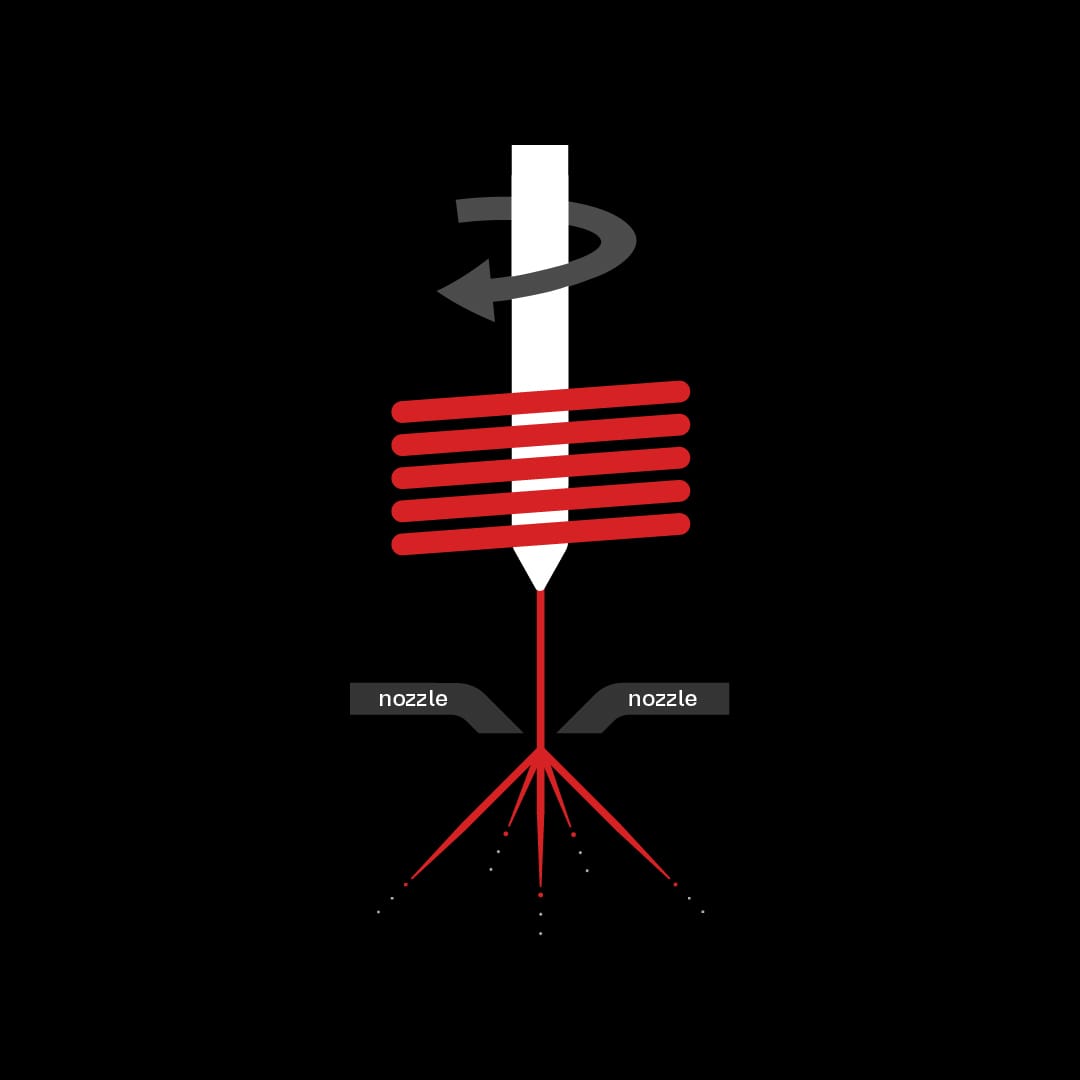
Figure 3 Electrode Inert Gas Atomization
VIGA – Vacuum Induction Melting Gas Atomization
Mechanism:
- Metal feedstock is melted in a ceramic or cold crucible using induction heating under vacuum or inert gas.
- Once fully molten, the metal is poured through a nozzle and atomized by inert gas jets.
Pros:
- Allows for flexible feedstock input (ingots, scrap, master alloys)
- Supports larger batch sizes than EIGA
- Lower contamination risk than traditional open-air atomization
Cons:
- Risk of contamination from crucible (unless cold crucible used)
- Requires more complex vacuum infrastructure
- Less pure than EIGA but more versatile in feedstock and alloying
Use cases:
Nickel-based superalloys, steels, aluminum alloys, and specialty AM powders
Water Atomization
Description:
Molten metal is sprayed with cold high-pressure water, which rapidly solidifies it into powder. The system includes water collectors, drying and screening equipment, and is typically open to air or uses nitrogen blanketing.
Pros:
- Very cost-effective for large volumes
- High cooling rate
- Simple and scalable
Cons:
- Irregular particle shape (reduced flowability)
- High risk of oxidation, porosity
- Not suited for reactive or high-value alloys
Typical applications:
Iron and copper powders for PM, sintering, or brazing
4. Ultrasonic Atomization (UA)
Description:
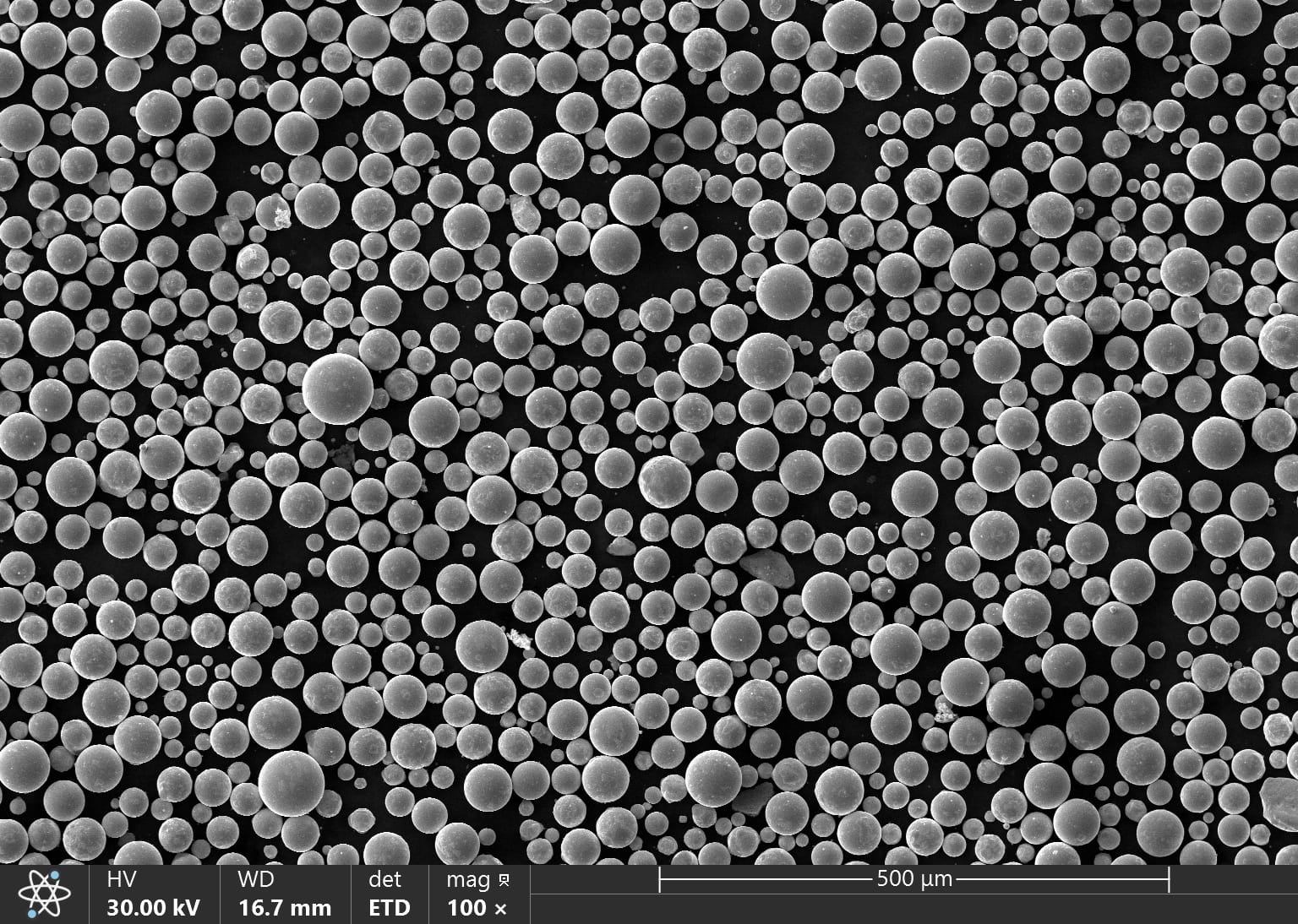
Ultrasonic atomization uses a high-frequency vibrating sonotrode (typically 20-60 kHz) to break up molten metal into a mist of spherical droplets. The metal is heated using induction, arc, or plasma melting depending on its properties and chemical composition. A small volume of molten metal forms a film on the sonotrode surface. The high-frequency mechanical oscillations destabilize the film, ejecting uniform microdroplets that rapidly solidify into spherical particles. Precise control over feed rate and frequency allows targeting specific particle sizes (typically 20–100 µm).
Pros:
- Low inert gas usage (cost-effective for argon-sensitive alloys)
- Produces highly spherical powder with narrow particle size distribution
- Supports nearly all alloy systems, including:
- Reactive metals (e.g., Mg, Ti, Gd)
- Refractory metals (e.g., Zr, Mo, Hf, Nb, Re)
- Precious metals (e.g., Ag, Au, Pt, Ir, Ru)
- Lower melting point metals (e.g., Al, Zn, Sn, Pb, Sb, Bi)
- Novel and experimental alloys
- Ideal for small batches, prototyping, or custom alloy development
Cons:
- Research or small production scale
- Requires good wetting between molten metal and sonotrode
Typical applications:
Research and development, alloys modifications, alloy development, small-batch powder production, closed-loop material cycles in advanced labs

What Metals Can Be Atomized Ultrasonically?
Thanks to its heating options including induction and plasma melting, ultrasonic atomization can process a vast range of materials:
- Lightweight materials such as Aluminium and Magnesium based alloys
- Low melting point materials such as Tin, Lead, Bismuth
- Titanium, Nickel and Cobalt based alloys
- Steels
- High-entropy alloys (HEAs)
- Molybdenum, Niobium, Zirconium, Rhenium and other refractory elements
- Gold, platinum, and other precious metals
Removing non metallic material from the feedstock is important to ensure the purity and quality of the final metal powder.
With no need for large gas volumes and excellent control over heat input, ultrasonic atomization is an especially good match for applications requiring custom alloy development or closed-loop material usage.
Discover more about ultrasonic atomization
AMAZEMET’s Approach to Powder Production
At AMAZEMET, ultrasonic atomization is at the core of our rePOWDER system, a compact platform enabling:
- Custom powder batches from both commercial alloys and elemental blends
- Alloy preparation and homogenization using arc melting in inert gas atmosphere
- Metal powder production from various feedstocks including broken samples, powders, rods, wire, bulk scrap and other irregular shapes, which are processed and refined to achieve the desired powder characteristics.
- Spherical powder generation for almost any alloy system
A refining process, such as using a continuous furnace for solid-state reduction, may be employed to remove impurities and improve powder quality before atomization.
We combine induction melting (for lower melting point materials up to 1300 °C), plasma melting (for higher melting point materials starting with steels up to refractory metals), and arc melting (for recycling or alloy synthesis) to support universities, R&D labs, and advanced manufacturing companies worldwide.
Explore our ultrasonic metal atomizer – rePOWDER
Comparison Table: Powder Manufacturing Methods
| Method | Pros | Cons | Best Suited For |
|---|---|---|---|
| Mechanical | Simple, low-cost, good for brittle alloys | Poor for ductile metals, irregular shapes | Hard/brittle metals, tool steels, small batch |
| Chemical | High-purity, fine particle capability; powders can be processed to achieve specific properties for advanced applications | Complex processing, lower throughput; electrolysis is more costly than other methods for producing high-value powders | Specialty/high-purity materials |
| Gas Atomization | Scalable, spherical particles, alloy versatility | High gas use, less efficient for refractory metals | Industrial AM powders, Ni/Al/Fe-based systems |
| Water Atomization | Very cost-effective, high throughput | Irregular shape, oxidation | Ferrous powders for sintering, low-spec use |
| Ultrasonic Atomization | Precise, minimal gas, works for nearly all alloys | Lower productivity, lab/pilot scale | Alloy development, AM R&D, recycling |
Conclusion
If you’re searching for how to make metal powder, the answer depends on your goals. For large-scale production of common alloys, gas or water atomization may be suitable. But for R&D, alloy prototyping, or working with challenging materials, ultrasonic atomization offers unmatched flexibility. Metal AM relies on powders with specific characteristics, and different AM processes require powders with tailored particle size and flowability to ensure optimal results. Mechanical engineering considerations are also important in designing powder production and handling systems for efficient and safe operation. The choice of AM process can influence powder reuse and quality, so understanding the requirements of various AM processes is crucial for success in metal AM.
Whether you’re developing a new high-entropy alloy, repurposing lab scrap, or seeking small batches of spherical powder for AM, AMAZEMET’s technology is designed to meet those challenges.
Learn more about metal powders or contact us to explore custom alloy and powder development with our rePOWDER system.
Share this content!