In the world of metal additive manufacturing (AM), metal powder recycling has evolved from an environmental ideal to a commercial necessity. Effective powder recycling for additive manufacturing reduces costs, minimizes environmental impact, and supports sustainable growth in AM. This guide explores the differences between powder reuse and recycling metal powder, the challenges of disposing of high-value powders like Ti Grade 5 and Inconel 718, and how AMAZEMET’s Powder2Powder initiative stands out as an innovative solution for recycling metal powders.
Powder Reuse vs. Recycling: Key Differences
Understanding the distinction between powder reuse and recycling metal powder is critical for effective waste management in additive manufacturing.
Powder Reuse
Powder reuse involves using leftover powder from previous AM processes, such as sieved or filtered powder, without fully melting or transforming it. While the powder may be cleaned or blended, it retains most of its original chemical composition and morphology. However, repeated exposure to high temperatures or spatter can degrade its properties over time.
Powder Recycling
Recycling metal powder is a more intensive process. It involves reclaiming powders at the end of their lifecycle, cleaning, re-melting, and re-atomizing them to restore their morphology, remove contamination, and ensure consistent composition. Recycling includes reuse but also focuses on more advanced processing to restore powder quality for future AM builds.
Challenges of Disposing Metal Powder, Especially Ti and Ni Alloys
High-value metal powders such as Titanium Grade 5 (Ti-6Al-4V) and Inconel 718 are crucial in many industries, but their disposal presents several challenges:
- High Cost: The cost of virgin Ti Grade 5 and Inconel 718 powders can be substantial, ranging from $80–$300 per kilogram for Ti-6Al-4V, and $40–$120 per kilogram for Inconel 718.
- Limited Reusability: Powders degrade with each reuse cycle. Particle morphology changes, oxygen content increases, and alloying elements like Al and V in Ti may evaporate, causing shifts in chemical composition.
- Regulatory and Disposal Costs: Disposing of spent powders is subject to stringent environmental regulations, and safe disposal can be costly, requiring incineration, landfill containment, or neutralization.
- Material Loss: Discarding powder means losing not only the material but also the energy and resources used to produce it.
Powder2Powder: An Efficient Solution for Metal Powder Recycling
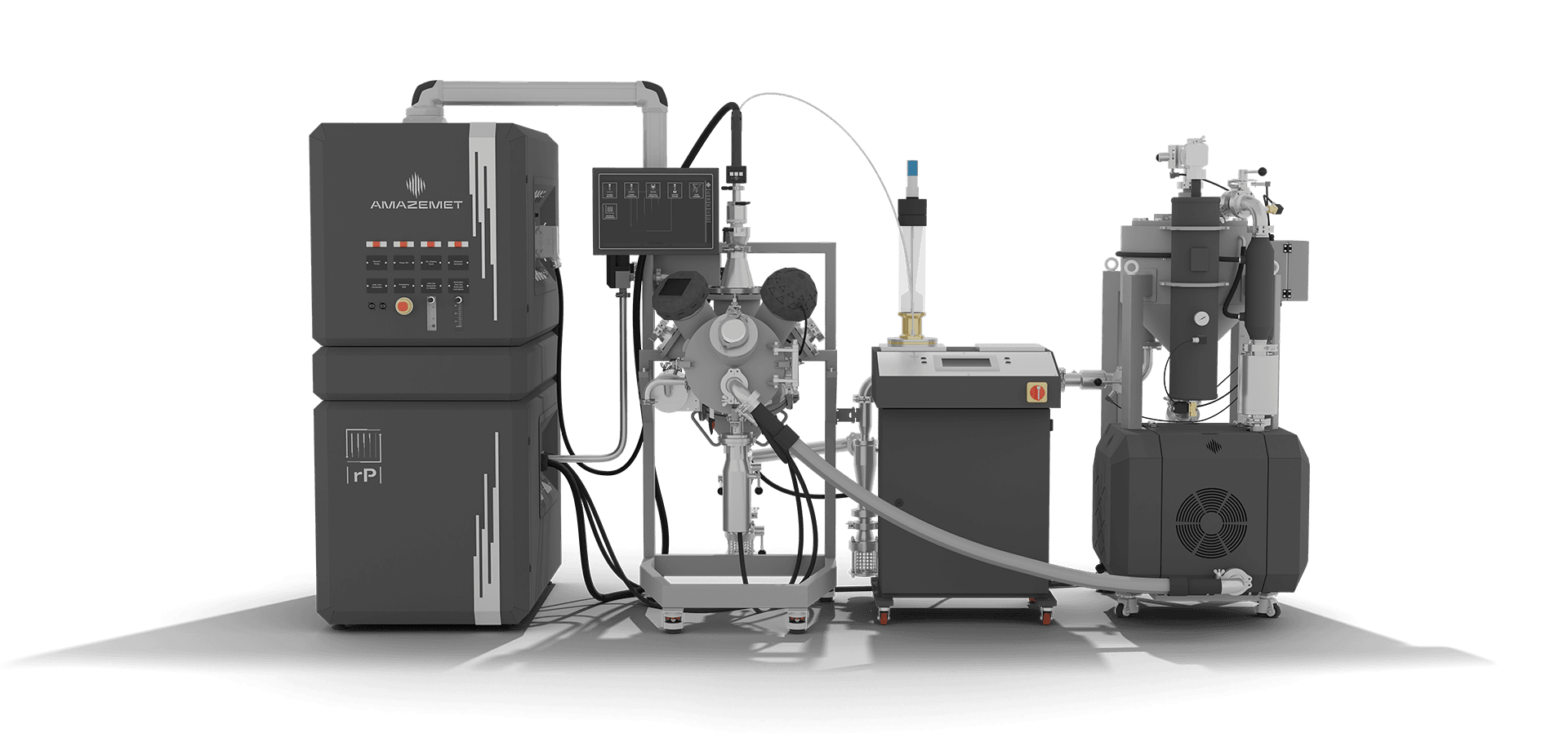
AMAZEMET’s Powder2Powder initiative is designed to address the challenges of conventional metal powder recycling methods. Here’s how it compares to other powder recycling for additive manufacturing methods:
| Method | What’s done | Pros | Cons |
|---|---|---|---|
| Reuse/Sieving/ /Blending |
Sieving and blending leftover powder |
Low cost, fast turnaround, retains many virgin powder properties |
Degradation accumulates, and inconsistent chemical composition |
| Re-atomization | Re-melting and re-atomizing powder |
High-quality morphology, restores flowability |
High energy input, expensive, contamination issues |
| Powder2Powder | Refurbishing and reprocessing powder |
Cost-effective, energy-efficient, better traceability |
Limits if the powder is highly chemically degraded or oxidized |
Economic, Technical, and Regulatory Implications
Cost Considerations:
For high-value materials like Inconel 718, discarding or reprocessing a large amount of powder increases the effective cost per kilogram. For example, if 20% of the powder must be discarded, the effective cost per kilogram increases by USD 20. This can add up quickly over large AM builds. For Ti-6Al-4V, which is 2-3 times more expensive, the cost implications are even more significant.
Technical Considerations:
Repeated reuse can introduce contaminants (e.g., oxygen and nitrogen) and evaporate volatile elements like Mn, Zn, or Al, which degrade powder properties, especially for critical applications like aerospace and medical parts. Powder2Powder mitigates these issues by conditioning powder between cycles, ensuring consistent quality.
Regulatory Considerations:
Recycling metal powder must meet strict industry standards for aerospace, medical, and other high-stakes applications. This includes tracking powder properties (e.g., oxygen levels, particle morphology) and ensuring compliance with specifications.
The Challenges of Powder Recycling and Reuse
The current challenges in metal powder recycling include:
- Powder Degradation: Repeated exposure to high-energy processes can degrade powder properties, leading to issues like satellites and increased fine particles.
- Contamination: Oxygen, moisture, and alloying element depletion can affect the quality of recycled powder.
- Cost of Requalification: Verifying that recycled powder will meet mechanical, fatigue, and microstructural requirements can be expensive, involving extensive testing and certification.
- Availability of Recycling Infrastructure: Many AM shops lack the infrastructure to properly clean or reprocess powders, limiting the effectiveness of simple sieving and blending.
Powder Reuse vs. Powder2Powder: A Comparative Analysis
While powder reuse can extend the life of powder through sieving and blending, its limitations become evident over time. The risk of contamination, material degradation, and increased waste drives up the cost per usable kilogram.
Powder2Powder, on the other hand, extends powder life and cost-effective solution for reactive metal powders. A solution that can be integrated to any print shop working with such powdesrs and increasing it’s sustainability and independence from fragile logistic chains.
Conclusion
Metal powder recycling is essential for the sustainable development of additive manufacturing. With solutions like Powder2Powder, AMAZEMET is pioneering a cost-effective, high-quality, and environmentally friendly alternative to traditional powder recycling for additive manufacturing methods. By extending the life of high-value powders like Ti Grade 5 and Inconel 718, Powder2Powder helps reduce costs, minimize waste, and ensure that the future of additive manufacturing is both sustainable and economically viable.
Share this content!