What is the strongest metal on Earth and why the answer is not obvious?
What is the strongest metal on Earth? This is one of the most common questions asked by engineers, students, and technology enthusiasts alike. At first glance, it sounds like there should be a single, definitive answer. In reality, the question is far more complex.
In materials science, strength is not one property. Metals are evaluated using several different mechanical metrics, each describing how a material behaves under a specific type of stress. A metal that performs exceptionally well in one category may perform poorly in another.
This is why lists of the strongest metal, the strongest metal in the world, or what’s the strongest metal often appear contradictory. This article explains how strength is defined, compares the strongest metals based on measurable data, and shows why no single metal dominates every application.
Defining metal strength using engineering metrics
Before identifying the strongest metal on Earth, it is necessary to understand how strength is measured.
Key mechanical properties used to define strength
- Tensile strength
The maximum stress a metal can withstand before breaking, typically measured in megapascals (MPa). - Yield strength
The stress level at which a metal begins to deform permanently. - Hardness
Resistance to scratching or indentation, often compared using the Mohs scale. - Toughness
The ability to absorb energy and resist fracture under sudden loads. - Density and ductility
Strength relative to weight and the ability to deform without cracking.
A metal with extremely high tensile strength may still fail catastrophically if it lacks toughness. This distinction explains why tungsten and titanium behave so differently despite both being considered among the strongest metals.
Why there is no single strongest metal in the world
The strongest metal depends entirely on context. Aerospace engineers prioritize strength to weight ratio. Toolmakers prioritize hardness and wear resistance. High temperature environments demand strength retention under heat rather than room temperature performance.
Because of this, asking what is the strongest metal in the world without defining conditions leads to misleading conclusions.
Tungsten as the strongest metal by tensile strength
Tungsten is often cited as the strongest metal on Earth, particularly when tensile strength is the primary criterion.
Mechanical properties of tungsten
- Tensile strength: approximately 980 to 1725 MPa
- Yield strength: around 750 MPa
- Mohs hardness: 7.5 to 9
- Melting point: 3422°C, the highest of all metals
- Density: 19.3 g/cm³
These values make tungsten exceptional in laboratory measurements and high temperature environments. It retains strength where most metals soften or melt.
Limitations of tungsten
Despite its impressive strength, tungsten is brittle at room temperature and performs poorly under impact loads. It can shatter rather than deform, which limits its use in many structural applications.
As a result, tungsten is often alloyed or used in specialized forms rather than as a standalone structural metal.
Titanium and titanium alloys as strength to weight leaders
When users ask what is the strongest metal, they are often thinking about titanium. While titanium does not have the highest absolute tensile strength, it excels in strength relative to weight.
Why titanium is considered one of the strongest metals
- Tensile strength of pure titanium: around 980 MPa
- Yield strength: approximately 275 to 580 MPa
- Density: only 4.5 g/cm³
- Mohs hardness: about 6
- Excellent corrosion resistance and biocompatibility
Titanium alloys can reach tensile strengths of 1100 to 1200 MPa while remaining significantly lighter than steel. Titanium aluminide alloys, for example, achieve tensile strengths close to 880 MPa with excellent high temperature performance.
This makes titanium one of the strongest metals in the world for aerospace, medical, and marine applications.
Strongest metals compared by key strength metrics
There is no universal ranking of the strongest metals, but the table below compares commonly discussed candidates using standard engineering criteria.
Comparison of strongest metals and alloys
- Tungsten
Tensile strength: 980 to 1725 MPa
Yield strength: ~750 MPa
Mohs hardness: 7.5 to 9
Key trait: extreme high temperature strength - Chromium
Tensile strength: ~418 to 700 MPa
Yield strength: ~316 to 400 MPa
Mohs hardness: 8.5 to 9
Key trait: exceptional hardness and wear resistance - Titanium
Tensile strength: ~980 MPa
Yield strength: 275 to 580 MPa
Mohs hardness: 6
Key trait: outstanding strength to weight ratio
Inconel (nickel-based alloy)
Tensile strength: ~965 to 1103 MPa
Yield strength: ~758 to 760 MPa
Key trait: heat and corrosion resistance
Why steel alloys dominate real world strength applications
Pure metals rarely deliver the best balance of properties required in real engineering environments. Steel alloys are a clear example of how material optimization, rather than extreme single parameters, drives practical strength.
Steel is one of the most important materials in human history and has played a fundamental role in the development of modern civilization. From early tools and weapons to railways, bridges, power plants, and industrial machinery, steel has enabled large scale construction, mass transportation, and global infrastructure. No other metallic material combines strength, availability, and adaptability at a comparable scale.
The dominance of steel is not accidental. Iron based alloys can be produced in vast quantities, processed with relatively low energy input compared to many high performance metals, and tailored to an enormous range of applications through alloying and heat treatment.
The role of powder production in enabling high strength materials
Producing the strongest metals for advanced applications often requires metal powders created through atomization.
Technologies such as induction melting and ultrasonic atomization allow for:
- Controlled particle morphology
- Reduced contamination
- Suitability for sintering and additive processes
Refractory metals and high performance alloys benefit especially from these approaches, as their properties are highly sensitive to processing conditions.
Where AMAZEMET fits into the discussion of strongest metals
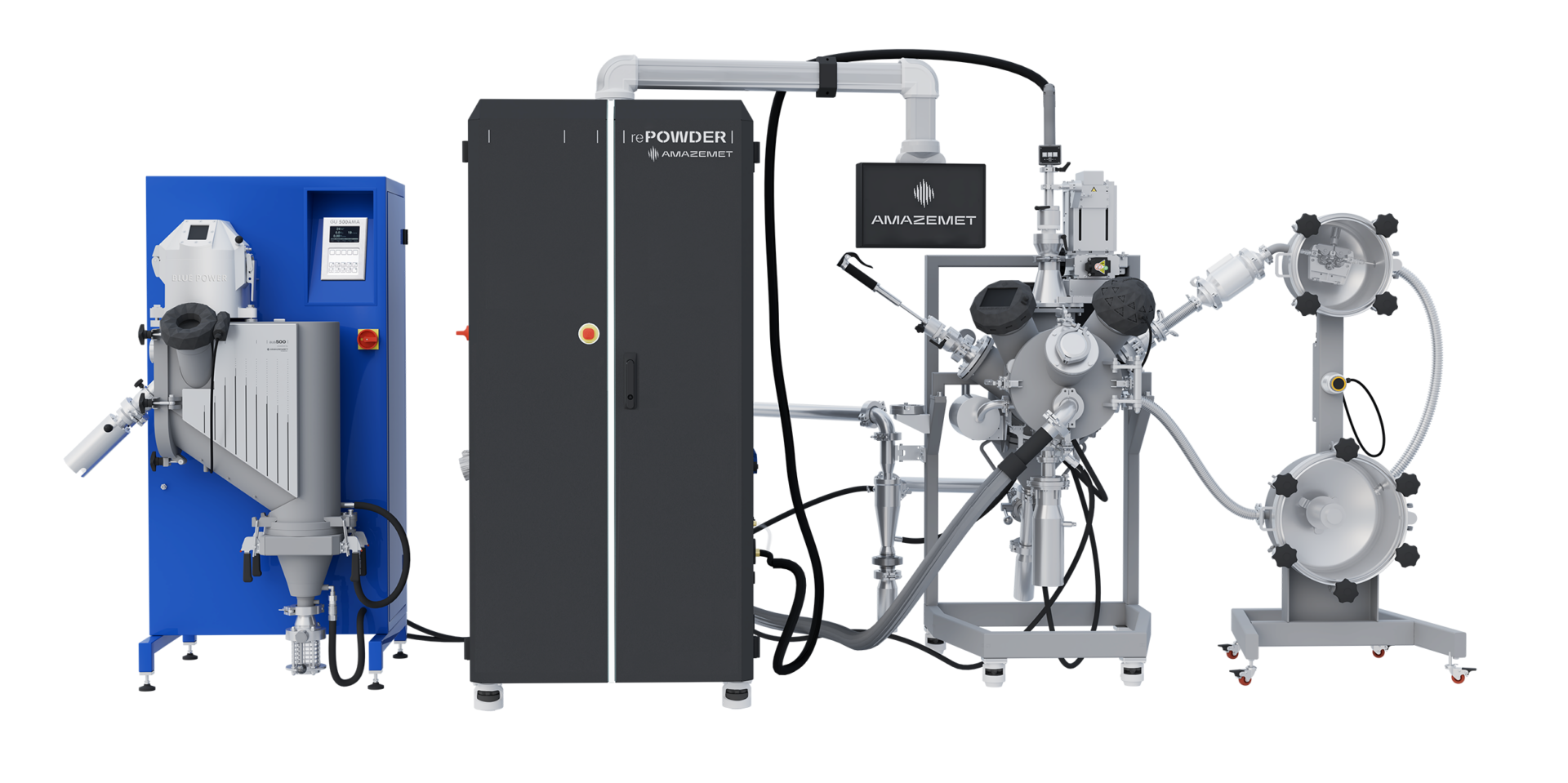
AMAZEMET focuses on enabling advanced materials research and industrial development through metal powder atomization technologies. Rather than offering every possible metal or finished component, the company supports users working with demanding materials that require precise control over powder quality.
This includes:
- Refractory and high melting point metals
- Reactive materials sensitive to oxidation
- Custom alloy development for research and pilot scale production
- Closed loop powder reuse strategies
Final thoughts on the strongest metal in the world
There is no single strongest metal in the world. Strength is defined by application, environment, and processing method.
The strongest metals are those whose properties can be reliably achieved, reproduced, and maintained in real manufacturing conditions. Understanding this distinction helps engineers move beyond simplified rankings and toward materials that truly perform in demanding applications.
Share this content!