What is copper used for?
Copper is used for electrical systems, thermal management, electronics, research equipment, alloys, antimicrobial surfaces, energy technologies, chemical processing, additive manufacturing, and advanced materials development. Its value comes from a rare combination of properties: high electrical conductivity, high thermal conductivity, ductility, corrosion resistance, alloying potential, and broad processability.
When people search for what is copper used for, they often expect a simple answer: wires, pipes, coins, and electronics. Those are valid and important examples. However, in scientific research and advanced R&D, copper is more than a familiar engineering metal. It is a functional material used to control electricity, heat, surface chemistry, and component performance.
This article focuses on 10 uses of copper in research, engineering, and advanced technology. It also explains why copper remains relevant in additive manufacturing, powder metallurgy, and experimental material development.
Why are copper uses so diverse
The wide range of copper uses is not accidental. Copper has one of the best combinations of conductivity and manufacturability among engineering metals. It can be cast, drawn into wires, rolled into sheets, machined into components, alloyed with other elements, atomized into powders, and processed into complex parts.
Copper is also important because it performs several functions at once. In one application, it may carry electrical current. In another, it may remove heat. In a third, it may act as an alloying base, a coating, a catalyst-related material, or a functional surface.
Important properties behind common and advanced copper uses include:
- Excellent electrical conductivity
- High thermal conductivity
- Good ductility and formability
- Corrosion resistance in many environments
- Compatibility with many alloy systems
- Antimicrobial activity under suitable conditions
- Relevance in powder metallurgy and additive manufacturing
This makes copper a bridge between traditional industries and advanced R&D.
1. Copper uses in electrical conductors
The most obvious answer to what is copper used for is electrical conduction. Copper is widely used in wires, cables, busbars, connectors, coils, motors, generators, transformers, and power electronics.
In research and advanced engineering, copper is often chosen when low electrical resistance is critical. It helps reduce energy losses, manage current flow, and improve system efficiency. This matters in laboratories, test stands, high-current devices, electromagnetic systems, and precision instruments.
Copper is not always selected only because it conducts electricity well. It is also ductile, relatively easy to fabricate, and available in many forms. These practical advantages make it useful for both large-scale electrical infrastructure and specialized experimental setups.
In advanced R&D, copper conductors may be designed with specific geometries, cooling channels, coatings, or joining methods. The goal is not only to move current, but to do it reliably under demanding thermal, mechanical, or electromagnetic conditions.
2. Uses of copper in thermal management
Another major category of uses of copper is heat transfer. Copper conducts heat very efficiently, which makes it useful in heat exchangers, heat sinks, cooling plates, thermal spreaders, and temperature-control systems.
In scientific equipment, thermal stability can be essential. Lasers, sensors, power electronics, vacuum systems, cryogenic devices, and measurement instruments often require precise heat management. Copper components can help remove heat from sensitive zones and distribute it across larger surfaces.
This is especially important in advanced manufacturing and high-power electronics. When heat is not removed efficiently, components may deform, degrade, oxidize, or fail. Copper helps engineers design systems that remain stable under load.
Thermal management is also one of the areas where additive manufacturing can become interesting. Complex internal cooling channels, optimized heat exchanger geometries, and compact thermal structures may benefit from powder-based manufacturing routes when the material and process are properly controlled.
3. Common uses of copper in electronics
Many common uses of copper are found in electronics. Copper appears in printed circuit boards, connectors, semiconductor packaging, shielding, interconnects, sensors, and power modules.
Copper is used because modern electronics require both electrical and thermal performance. As devices become smaller and more powerful, heat dissipation becomes a major design issue. Copper helps carry current and manage heat in the same system.
In R&D, copper is often used in prototype devices and test platforms. Researchers may use copper foils, films, wires, meshes, substrates, or coatings depending on the experiment. Copper can also be combined with ceramics, polymers, carbon materials, or other metals to create functional composites.
Electronics are a good example of why copper remains difficult to replace. A cheaper or lighter material may work in some situations, but few materials offer the same combination of electrical conductivity, thermal conductivity, processability, and availability.
4. What is copper used for in everyday life?
When users ask what is copper used for in everyday life, the answer usually includes electrical wiring, plumbing, cookware, coins, phones, computers, vehicles, appliances, and decorative elements.
These everyday applications are important because they show how copper supports modern infrastructure. Homes, offices, factories, vehicles, and communication systems all depend on copper-containing components.
Examples of things made out of copper or containing copper include:
- Electrical wires and cables
- Circuit boards and electronic connectors
- Plumbing tubes and fittings
- Heat exchangers and radiators
- Electric motors and transformers
- Coins and decorative objects
- Roofing and architectural elements
- Cookware and kitchen equipment
- Vehicle components
- Renewable energy systems
However, for a company focused on advanced materials, the most relevant question is not only “what objects contain copper?” It is also “how can copper be processed, modified, atomized, alloyed, or manufactured for demanding technical applications?”

5. Copper uses in scientific instruments
Copper is widely used in scientific instruments because it can provide electrical conduction, heat transfer, shielding, and structural support. These properties are useful in research equipment where stability and precision matter.
Copper components may be found in:
- Vacuum systems
- Cryogenic equipment
- Particle accelerator components
- Electromagnetic coils
- Laboratory power systems
- Thermal exchangers
- Sensor housings
- Shielding structures
- Experimental fixtures
In many of these systems, copper is not visible to the end user. It works inside the device, controlling heat, current, or electromagnetic behavior.
For example, copper can help stabilize temperatures in measurement systems. It can also support high-current components in experimental equipment. In cryogenic applications, copper may be used where thermal conduction is needed at low temperatures.
These uses show why copper is not only a commodity metal. In the right context, it becomes a precision engineering material.
6. Uses of copper in alloys and non-ferrous metals
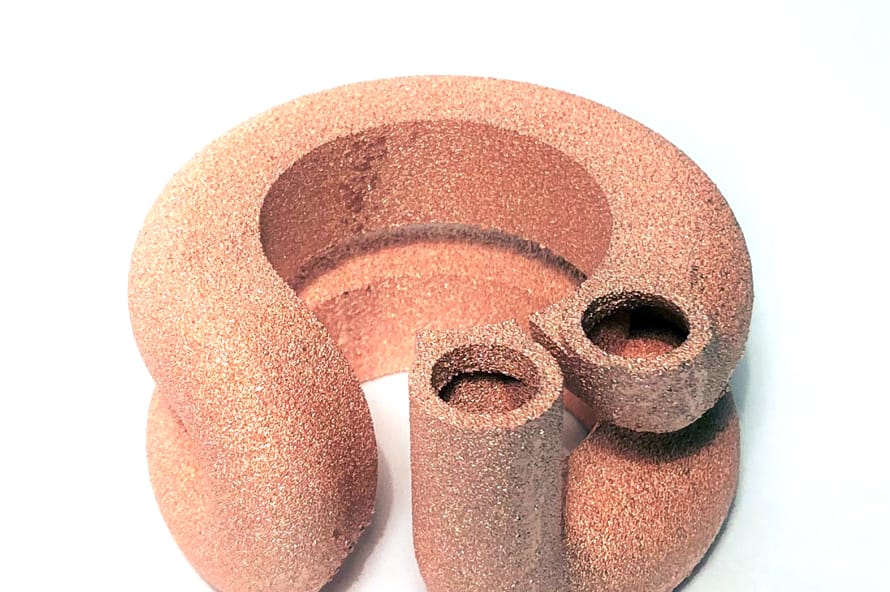
Copper is also important as a base element for alloys. Brass, bronze, copper-nickel, copper-chromium, copper-tin, and copper-aluminum systems are all examples of copper-containing materials with tailored properties.
This is one of the most important uses of copper in materials science. Alloying allows engineers to adjust strength, hardness, corrosion resistance, wear behavior, thermal stability, and electrical performance.
Copper alloys are part of the broader group of non-ferrous metals. These materials do not use iron as the main element, which often gives them advantages in corrosion resistance, conductivity, density, or specialized functional behavior.
In advanced R&D, copper alloys may be designed for specific operating conditions. For example, a researcher may need a copper-based material that balances high conductivity with improved mechanical strength. Another project may focus on corrosion resistance, high-temperature behavior, or compatibility with additive manufacturing.
The key point is that copper is not only used in pure form. It is also a platform for alloy design.
7. Copper powder in additive manufacturing and powder metallurgy
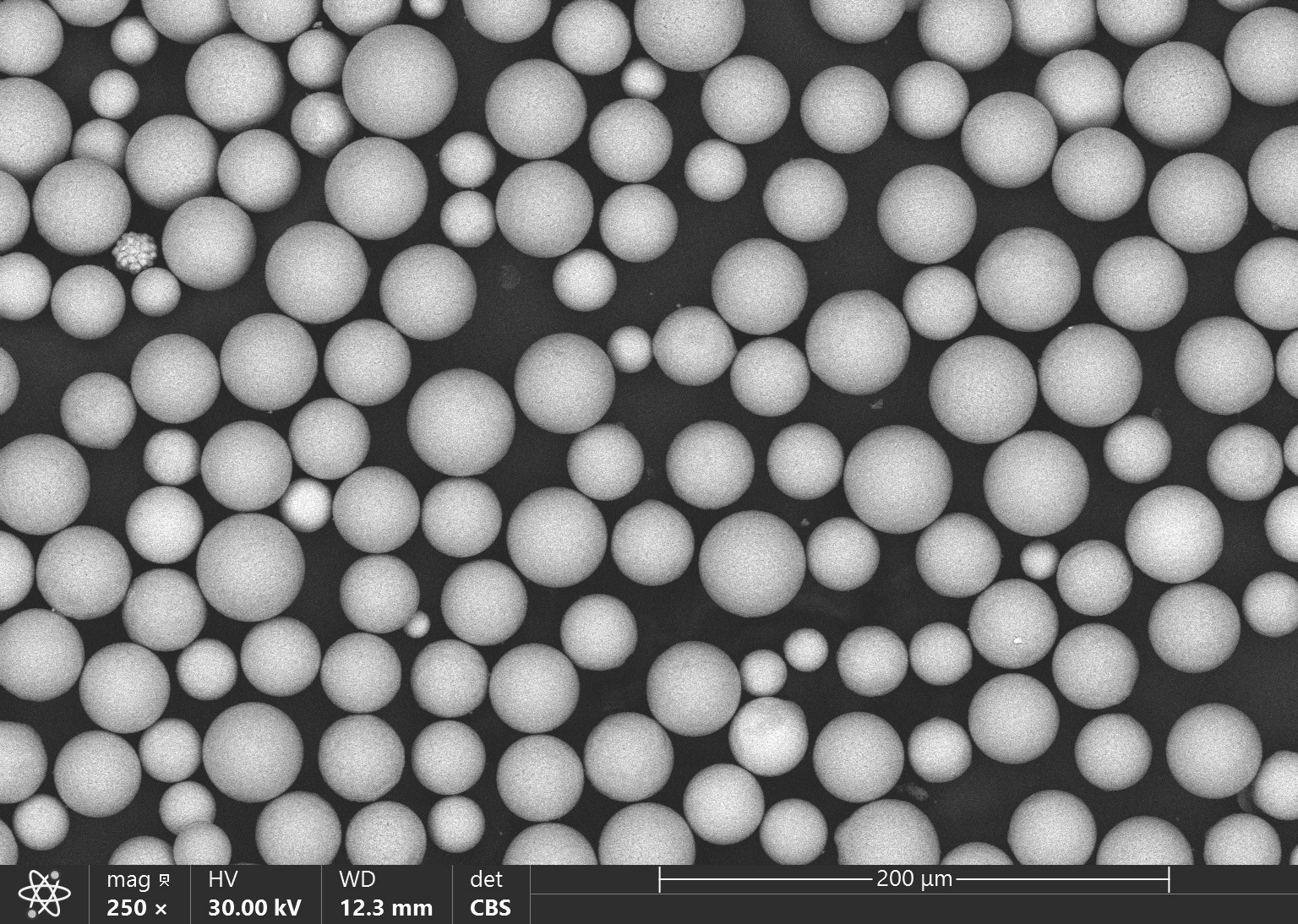
One increasingly important area is copper powder for powder metallurgy and additive manufacturing. Powder form allows copper and copper alloys to be processed through routes such as laser powder bed fusion, directed energy deposition, hot pressing, sintering, and other advanced manufacturing methods.
In additive manufacturing, copper is attractive because it can enable complex geometries for electrical and thermal applications. Examples include cooling structures, heat exchangers, induction components, electrical contacts, and compact conductive parts.
However, copper is also challenging to process. Its high thermal conductivity can make it difficult to maintain a stable melt pool. Depending on the laser wavelength and powder condition, reflectivity may also affect energy absorption. Oxidation, powder morphology, particle size distribution, and flowability can all influence process stability.
This is why the quality of copper powder matters. In research and development, powder is not just a feedstock. It is a controlled input that affects melting behavior, density, microstructure, surface quality, and final part performance.
For experimental projects, small batches of custom copper alloys can be especially valuable. They allow researchers to evaluate new compositions without committing to large-scale production.
8. Copper uses in antimicrobial and biomedical research
Copper and copper alloys are also studied for antimicrobial surfaces. Under suitable conditions, copper can reduce microbial survival on surfaces, which makes it interesting for healthcare, public infrastructure, and biomedical research.
This does not mean copper is a universal substitute for cleaning, sterilization, or infection-control protocols. Its effectiveness depends on surface condition, alloy composition, contact time, environment, and the type of organism being studied.
Still, antimicrobial copper is an important research area. Scientists investigate copper-containing surfaces, coatings, nanoparticles, and alloys to understand how copper ions and surface reactions affect bacteria and other microorganisms.
Potential research directions include:
- Antimicrobial touch surfaces
- Hospital and laboratory surfaces
- Coatings for high-contact components
- Copper-containing composites
- Surface engineering for hygiene-related applications
- Biomedical device research
For advanced materials companies, this field is relevant when copper-based materials need to be produced, modified, powdered, coated, or tested in controlled forms.
9. What are the uses of copper in energy technologies?
Another important answer to what are the uses of copper is energy. Copper is used across power generation, transmission, storage, and conversion systems.
In renewable energy, copper appears in wind turbines, solar power systems, inverters, transformers, cables, grounding systems, and electric motors. In electric vehicles, copper is used in batteries, motors, charging systems, power electronics, and wiring.
Copper is also important in research related to high-efficiency electrical machines and thermal management for power systems. As electrification expands, materials with strong electrical and thermal performance become even more important.
In advanced R&D, copper may be used in:
- Battery research equipment
- Electrical contacts
- Busbars and current collectors
- Power electronics cooling
- Motor and generator components
- Induction systems
- Thermal management devices
- Experimental energy systems
Copper’s role in energy technologies is not limited to one component. It supports the electrical and thermal backbone of many systems.
10. Copper uses in advanced R&D and experimental materials
The final category of 10 uses of copper is advanced R&D itself. Copper is often used as a research material because it is scientifically useful, industrially relevant, and sensitive to processing conditions.
Researchers may study copper to understand:
- Conductivity and microstructure relationships
- Grain growth and recrystallization
- Additive manufacturing process parameters
- Powder behavior and oxidation
- Alloy strengthening mechanisms
- Heat treatment effects
- Coatings and surface modification
- Joining and bonding methods
- Metal matrix composites
- Functional copper-based materials
Copper is also a useful model material in some manufacturing studies. Because its properties are well known, changes in performance can often be connected to processing, microstructure, or contamination.
At the same time, copper is not always easy to process in advanced manufacturing. Its thermal conductivity, oxidation behavior, and optical properties can make powder-based processing demanding. This creates a strong need for controlled feedstock, careful parameter development, and material-specific process knowledge.
Why copper powder quality matters
For powder-based processing, copper powder quality has a direct effect on results. A powder with poor flowability, inconsistent particle size, high oxygen content, or irregular morphology can create problems during manufacturing.
Important powder characteristics include:
- Particle size distribution
- Particle morphology
- Chemical purity
- Oxygen content
- Flowability
- Apparent and tap density
- Surface condition
- Batch-to-batch consistency
These factors are especially important in research. If powder quality changes between batches, it becomes difficult to compare experiments. Researchers may not know whether a performance change comes from the alloy design, the printing parameters, the heat treatment, or the powder itself.
Controlled powder production helps reduce that uncertainty.
AMAZEMET perspective: copper in powder-based R&D
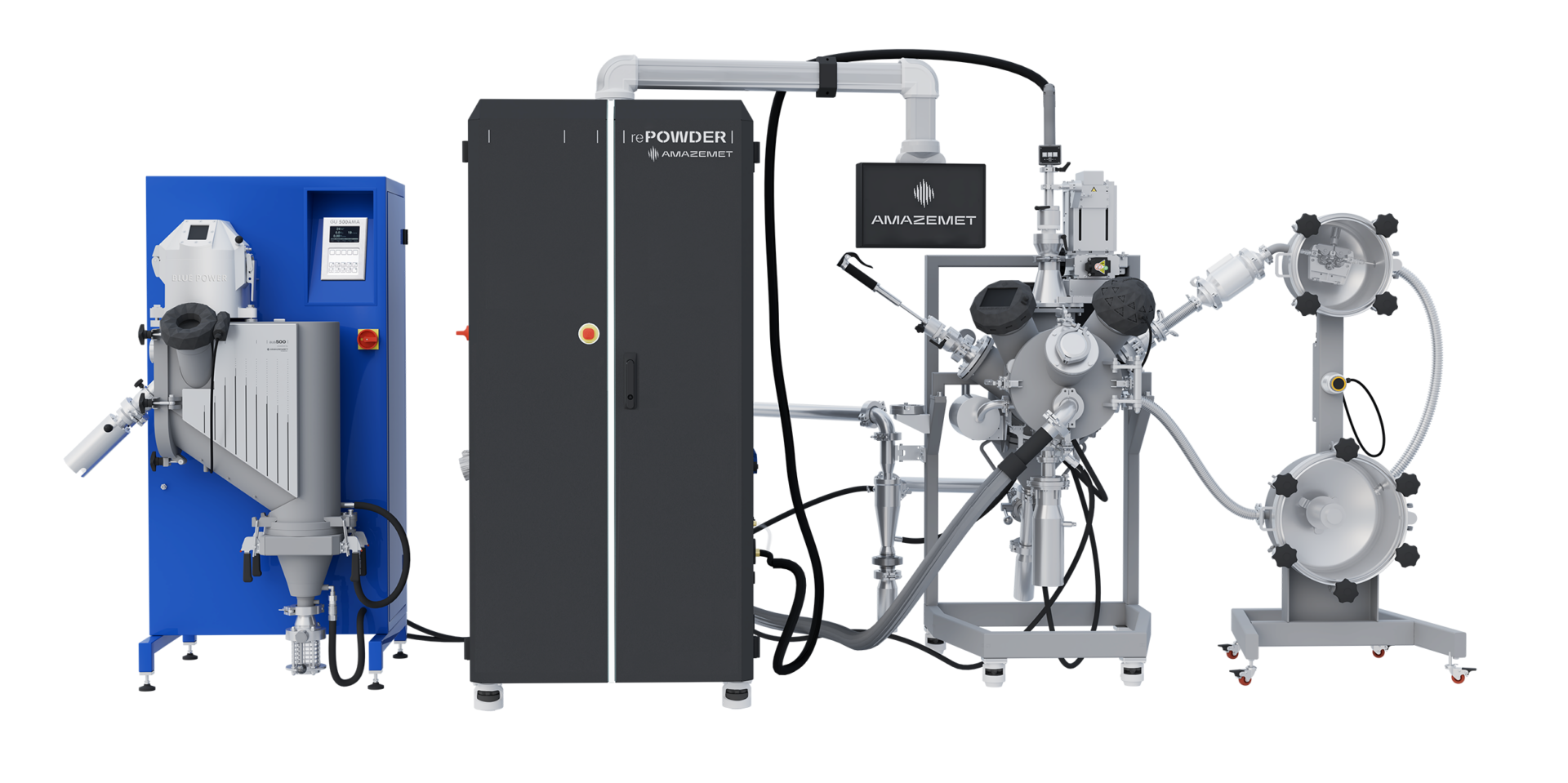
AMAZEMET’s connection to copper is strongest in the context of metal powders, non-ferrous materials, atomization, and additive manufacturing research. Copper is used in many everyday products, but AMAZEMET’s most relevant area is not standard copper goods such as pipes, wires, or household items.
The more relevant focus is advanced material development. This includes copper and copper alloy powders for research, prototyping, additive manufacturing trials, and small-batch experimental work.
In R&D, engineers may need a specific copper alloy composition, a controlled powder fraction, or a small amount of material for process development. They may also need to evaluate how powder morphology, oxygen content, and particle size influence the final result.
This is where advanced powder production and process knowledge become important. Copper’s properties make it valuable, but also technically demanding. Controlled feedstock helps researchers move from a material idea to a testable process and, eventually, to a functional component.
Key takeaways: copper uses in science and engineering
Copper uses range from everyday wiring and plumbing to advanced scientific instruments, thermal management systems, energy technologies, antimicrobial surfaces, and additive manufacturing.
The answer to what copper is used for depends on the context. In daily life, copper is used in electrical, plumbing, electronic, and architectural products. In advanced R&D, it is used as a conductive, thermal, functional, and processable engineering material.
The most important uses of copper come from its combination of electrical conductivity, thermal conductivity, ductility, corrosion resistance, and alloying potential.
Copper is also highly relevant in powder metallurgy and additive manufacturing, where powder quality directly affects process stability and final performance.
For advanced materials research, copper is not only a familiar metal. It is a platform for experiments, prototypes, custom alloys, and high-performance components.
Share this content!