
What are superconductors?
Superconductors are materials that can conduct electric current with no electrical resistance when they are cooled below a specific temperature. This temperature is called the critical temperature, or Tc. Below this point, the material enters a superconducting state, where electrical energy can move through it without the heat losses normally seen in metals such as copper, aluminum, or steel.
This behavior makes superconductors scientifically fascinating and technologically important. In a conventional conductor, electrons collide with atoms, impurities, and defects in the crystal lattice. These interactions create electrical resistance, which converts part of the electrical energy into heat. In a superconductor, this resistance disappears under the right conditions.
Superconductors are not simply “better metals.” They are materials with a distinct physical state. Their properties depend on temperature, magnetic field strength, current density, chemical composition, crystal structure, and microstructure. That is why superconductivity is not only a physics problem, but also a materials science challenge.
The physics of superconductors in simple terms
To understand the physics of superconductors, it helps to start with what happens in ordinary metals. Metals conduct electricity because some of their electrons are free to move. However, that movement is never perfectly smooth. Electrons scatter as they pass through the lattice, especially when the material contains defects, which they usually have, such as impurities, grain boundaries, or thermal vibrations.
In many low-temperature superconductors, electrons behave differently. They form paired states known as Cooper pairs. These pairs move through the material in a coordinated quantum state, allowing current to flow without resistance. This explanation is part of the Bardeen–Cooper–Schrieffer (BCS) theory, which describes many conventional superconductors.
A second key feature is the Meissner effect. When a material becomes superconducting, it can expel magnetic fields from its interior. This is why superconductors are often associated with magnetic levitation demonstrations. The effect is not just a visual trick. It proves that superconductivity is a separate thermodynamic state, not merely perfect conductivity.
Three main limits define whether a material remains superconducting:
- Critical temperature: the maximum temperature below which superconductivity appears.
- Critical magnetic field: the magnetic field above which superconductivity breaks down.
- Critical current density: the maximum current the material can carry before returning to a normal resistive state.
For real applications, all three matter. A superconductor that works only at very low temperature, weak magnetic field, or low current may be scientifically valuable but difficult to use in industrial systems.
Why are superconducting materials difficult to design
Superconducting materials must combine electronic, magnetic, thermal, and mechanical performance. This is a demanding combination. A material may show excellent superconducting behavior in a laboratory sample but still be difficult to manufacture, shape, join, or operate in a device.
The challenge is especially visible when superconductors are used in magnets, power systems, sensors, accelerators, or quantum technologies. In these applications, the material must retain its properties under stress, thermal cycling, strong fields, and long-term operation.
Important material factors include:
- Chemical purity, because impurities can either support or disrupt superconductivity depending on the system.
- Phase stability, because unwanted phases may reduce current-carrying capacity.
- Grain structure, especially in ceramic and brittle superconductors.
- Defect distribution, which can influence magnetic flux pinning.
- Mechanical behavior, since many superconductors are brittle or strain-sensitive.
- Thermal conductivity, which affects cooling and stability.
This is where superconductivity connects strongly with advanced manufacturing. The final performance of a superconducting component is not controlled only by its chemical formula. It is also controlled by powder quality, consolidation method, heat treatment, microstructure, and geometry.
Types of superconductors
There are several ways to classify types of superconductors. The most common distinction is between type-I and type-II superconductors.
Type-I superconductors
Type-I superconductors are usually pure elemental materials. They completely expel magnetic fields below a critical field, but they lose superconductivity abruptly when that field is exceeded. Examples include mercury, lead, and tin under suitable conditions.
These materials are important historically and scientifically, but they are not usually the best option for high-field engineering applications. Their critical fields are generally too low for demanding devices.
Type-II superconductors
Type-II superconductors are more relevant for many practical applications. They can remain superconducting in stronger magnetic fields by allowing magnetic flux to penetrate the material in quantized vortices. This mixed state makes them useful in high-field magnets and other advanced systems.
Examples include niobium-titanium, niobium-tin, magnesium diboride, cuprates, and iron-based superconductors. Many of these materials require careful processing to control phase formation, grain connectivity, and defect structure.
In type-II superconductors, controlled defects can be beneficial. They can pin magnetic vortices and help maintain high current density in magnetic fields. This is one reason why microstructure engineering is so important.
High temperature superconductors
The term high temperature superconductors can be misleading. It does not usually mean room-temperature superconductors. Instead, it refers to materials that become superconducting at temperatures higher than conventional low-temperature superconductors.
Many high-temperature superconductors are ceramics, especially copper oxide materials known as cuprates. These materials can operate at temperatures accessible with liquid nitrogen, depending on their composition and use case. That is a major advantage compared with materials that require liquid helium cooling.
However, high-temperature superconductors bring their own challenges. They are often brittle, anisotropic, and sensitive to grain boundaries. Their processing can be more complex than that of metallic superconductors. In wire, tape, coating, or bulk form, manufacturing quality has a large influence on performance.
Important high-temperature superconductor families include:
- Cuprate superconductors, such as YBCO and BSCCO.
- Iron-based superconductors, which are actively studied for their unusual electronic behavior.
- Hydride superconductors, which may show very high transition temperatures under extreme pressure.
- Other complex ceramics and intermetallics, depending on composition and structure.
The scientific goal is not only to raise the critical temperature. Researchers also need materials that can be produced reliably, shaped into useful forms, and operated under realistic conditions.
Common superconducting materials
Superconductors can be metals, alloys, ceramics, intermetallic compounds, or complex layered materials. Each group has different advantages and limitations.
Niobium-titanium
Niobium-titanium, often written as NbTi, is one of the most widely used superconducting alloys. It is valued because it can be processed into wires and used in magnet systems. It is a low-temperature superconductor, but it has strong practical relevance due to its manufacturability and mechanical behavior.
Niobium-tin
Niobium-tin, or Nb3Sn, can operate in higher magnetic fields than NbTi, but it is more brittle and more difficult to process. Its performance depends strongly on phase formation and heat treatment. This makes it a good example of how metallurgy directly affects superconducting properties.
Magnesium diboride
Magnesium diboride, or MgB2, is a relatively simple compound compared with many ceramic superconductors. It has attracted attention because of its superconducting temperature and potential for wire and bulk applications. Processing, density, grain connectivity, and impurity control remain important.
Cuprate superconductors
Cuprates are among the best-known high-temperature superconductors. They have layered crystal structures and complex electronic behavior. They can reach higher critical temperatures than conventional metallic superconductors, but their brittleness and grain boundary sensitivity make manufacturing more difficult.
Iron-based superconductors
Iron-based superconductors are another important family. They are scientifically interesting because their superconductivity is linked to complex electronic and magnetic interactions. They are also studied for potential applications, though processing and performance optimization remain active areas of research.
Properties that make superconductors useful
The most famous property of superconductors is zero electrical resistance, but this is only part of the story. Their broader value comes from a combination of electrical and magnetic behavior.
Key properties include:
- Lossless current flow, which can reduce energy losses in certain systems.
- Strong magnetic field generation, useful in MRI machines, research magnets, fusion devices, and particle accelerators.
- Magnetic levitation, used in transport concepts and bearing systems.
- High sensitivity to magnetic fields, useful in sensors.
- Quantum behavior, important in quantum computing and precision measurement.
The practical use of superconductors depends on whether these benefits outweigh the cost and complexity of cooling, manufacturing, and system integration. A superconductor must be evaluated as part of a full engineering system, not as an isolated material.
Where superconductors are used
Superconductors already support several advanced technologies. Some are mature, while others remain under development.
Current and emerging applications include:
- Medical imaging, especially MRI systems.
- Scientific research magnets, including high-field laboratory magnets.
- Particle accelerators, where superconducting magnets guide charged particles.
- Fusion energy research, where strong magnetic fields help confine plasma.
- Quantum computers, where superconducting circuits can act as qubits.
- Power transmission and grid components, including cables, fault current limiters, and transformers.
- Magnetic levitation systems, where superconductivity can reduce mechanical contact and friction.
Not every application uses the same material. A superconducting magnet, a quantum circuit, and a power cable can require very different material forms, processing routes, and performance metrics.
Superconductors and additive manufacturing
Superconductors are often discussed in terms of physics, but manufacturing is increasingly important. Advanced devices may require complex shapes, internal cooling channels, graded materials, or small experimental batches. These needs naturally connect superconductivity research with additive manufacturing.
Additive manufacturing is not a universal solution for superconductors. Many superconducting materials are sensitive to oxidation, phase changes, cracking, porosity, and thermal history. Some are brittle ceramics, while others require precise alloying and heat treatment. Still, additive manufacturing can be valuable for research, prototyping, tooling, support structures, and selected metallic or composite systems.
Potential links between superconductors and additive manufacturing include:
- Producing complex metallic components for cryogenic systems.
- Manufacturing customized heat exchangers or current leads.
- Developing experimental alloy compositions.
- Creating near-net-shape parts for advanced research devices.
- Supporting rapid iteration of material systems and geometries.
- Preparing feedstock for powder-based processing routes.
For powder-based additive manufacturing, feedstock quality is essential. Particle size distribution, morphology, oxygen content, flowability, and chemical homogeneity can all influence final part properties. This is why advanced metal powders matter in materials research and manufacturing.
Why powder quality matters for advanced materials
When working with demanding materials, powder is not just a raw input. It is the starting microstructure. The powder determines how material melts, spreads, consolidates, reacts, and solidifies.
For superconducting or superconductivity-adjacent research, powder quality can influence:
- Chemical homogeneity.
- Oxygen and nitrogen pickup.
- Phase formation during heat treatment.
- Porosity and density.
- Surface contamination.
- Flowability in powder-bed or directed-energy processes.
- Reproducibility between experimental batches.
This is especially important for small-batch research. In early-stage materials development, researchers may need only a limited quantity of a custom composition. However, that small batch must still be representative, controlled, and well characterized. Poor powder quality can make it difficult to determine whether a result comes from the material concept itself or from processing variability.
The role of microstructure in superconducting performance
In superconductors, microstructure can be as important as composition. Grain boundaries, precipitates, pores, cracks, and secondary phases may either improve or degrade performance depending on the material system.
For example, in some type-II superconductors, defects can help pin magnetic vortices and increase useful current density. In other cases, defects interrupt current paths and reduce performance. This means that “defect-free” is not always the correct goal. The real goal is controlled microstructure.
Processing methods such as atomization, powder handling, additive manufacturing, sintering, hot isostatic pressing, and heat treatment can all affect microstructure. This makes superconducting materials an interdisciplinary field involving physics, chemistry, metallurgy, ceramics, and manufacturing engineering.
Are room-temperature superconductors available?
Room-temperature superconductivity is one of the major goals in condensed matter physics. Some materials have shown superconducting behavior at very high temperatures under extreme pressures, but these are not practical room-temperature superconductors for everyday engineering use.
A practical room-temperature superconductor would need more than a high critical temperature. It would also need to work at manageable pressure, carry useful current, tolerate magnetic fields, remain stable over time, and be manufacturable into wires, films, bulk parts, or device structures.
For now, most real-world superconducting technologies still require cryogenic cooling. This does not make them impractical. It simply means that the cooling system is part of the engineering design.
Why superconductors matter for future technology
Superconductors are important because they challenge the limits of electrical efficiency, magnet technology, and quantum engineering. They may contribute to more powerful medical imaging, higher-field research instruments, compact fusion systems, efficient power infrastructure, and scalable quantum devices.
However, progress depends on materials. New superconductors must be discovered, understood, processed, and integrated. That requires control over composition, feedstock, microstructure, and manufacturing route.
This is why the future of superconductors is not only about theoretical physics. It is also about practical materials engineering.
AMAZEMET perspective: advanced materials, powders, and process development
AMAZEMET does not need to cover every possible superconductor application to contribute to the broader advanced materials ecosystem. The company’s focus is especially relevant where materials are difficult to process, needed in small batches, or connected with powder-based manufacturing and research.
In superconductivity-adjacent projects, the key questions often involve material preparation rather than only material selection. Can a custom alloy be produced in powder form? Can the oxygen content be controlled? Can small batches be made for experimental trials? Can powder characteristics be adjusted for additive manufacturing or further processing?
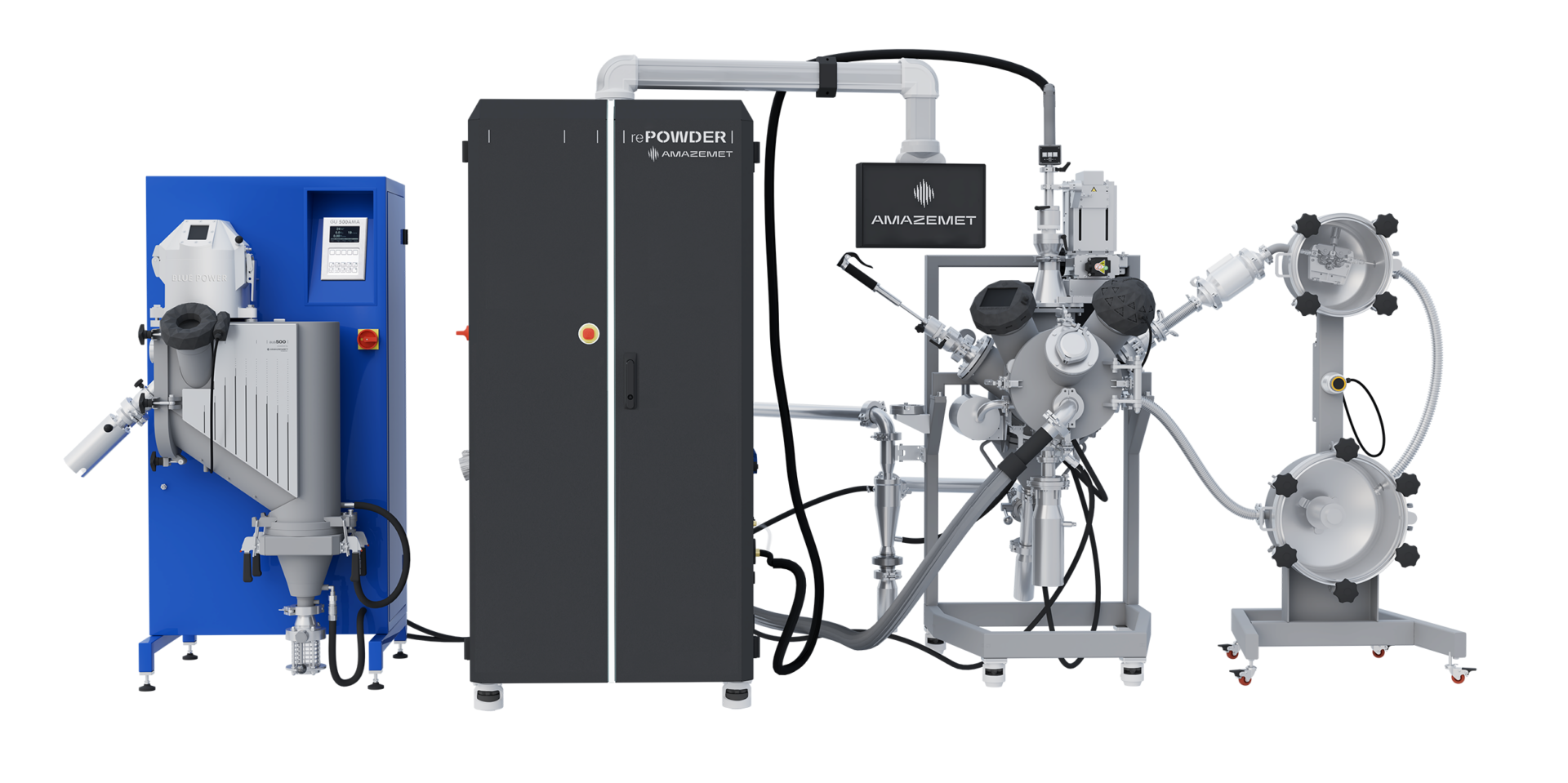
These are the types of questions that connect superconductors with metal powders, atomization, and additive manufacturing. For researchers and engineers working on advanced material systems, controlled feedstock production can be an important step between a promising composition and a useful component.
Key Takeaways
Superconductors are materials that can conduct electricity without resistance below a critical temperature. They also show unique magnetic behavior, including the Meissner effect.
The main types of superconductors include type-I and type-II materials, with type-II superconductors being especially important for high-field applications.
High temperature superconductors operate at higher temperatures than conventional superconductors, but they often bring manufacturing challenges related to brittleness, grain structure, and phase control.
The performance of superconducting materials depends not only on chemistry, but also on microstructure, processing, and final form.
Additive manufacturing and powder metallurgy can support superconductivity-related research by enabling custom materials, small-batch experimentation, and complex component development.
For advanced materials work, powder quality is a scientific variable, not just a supply-chain detail.
Share this content!