Introduction
Additive manufacturing (AM), commonly known as 3D printing, encompasses a wide range of technologies united by one core principle: creating objects layer-by-layer directly from digital 3D models. This tool-less method excels in prototyping, complex geometries, and low-volume production. It reduces waste, enables fast iteration, and allows for the integration of previously impossible geometries into a single part. Due to the growing number of names and proprietary technologies, the terminology can be confusing. To address this, the ASTM F42 Committee introduced a standardized classification in ISO/ASTM 52900, organizing AM into seven types. This article introduces each method and provides examples of additive manufacturing technologies, with a primary focus on metal additive manufacturing processes.
7 types of additive manufacturing ISO/ASTM 52900
This overview includes all 7 types of additive manufacturing defined in the ISO/ASTM standard and highlights the different types of additive manufacturing processes, their materials, applications, and advantages. Whether you’re exploring additive manufacturing techniques for industrial use or researching the best methods of additive manufacturing for product development, this guide outlines the most relevant additive manufacturing types. Understanding the characteristics and requirements of each method helps industries such as aerospace, automotive, medical, and energy choose the optimal process for their application.
Powder Bed Fusion (PBF)
Powder Bed Fusion Laser Beam Melting (PBF-LB/M)
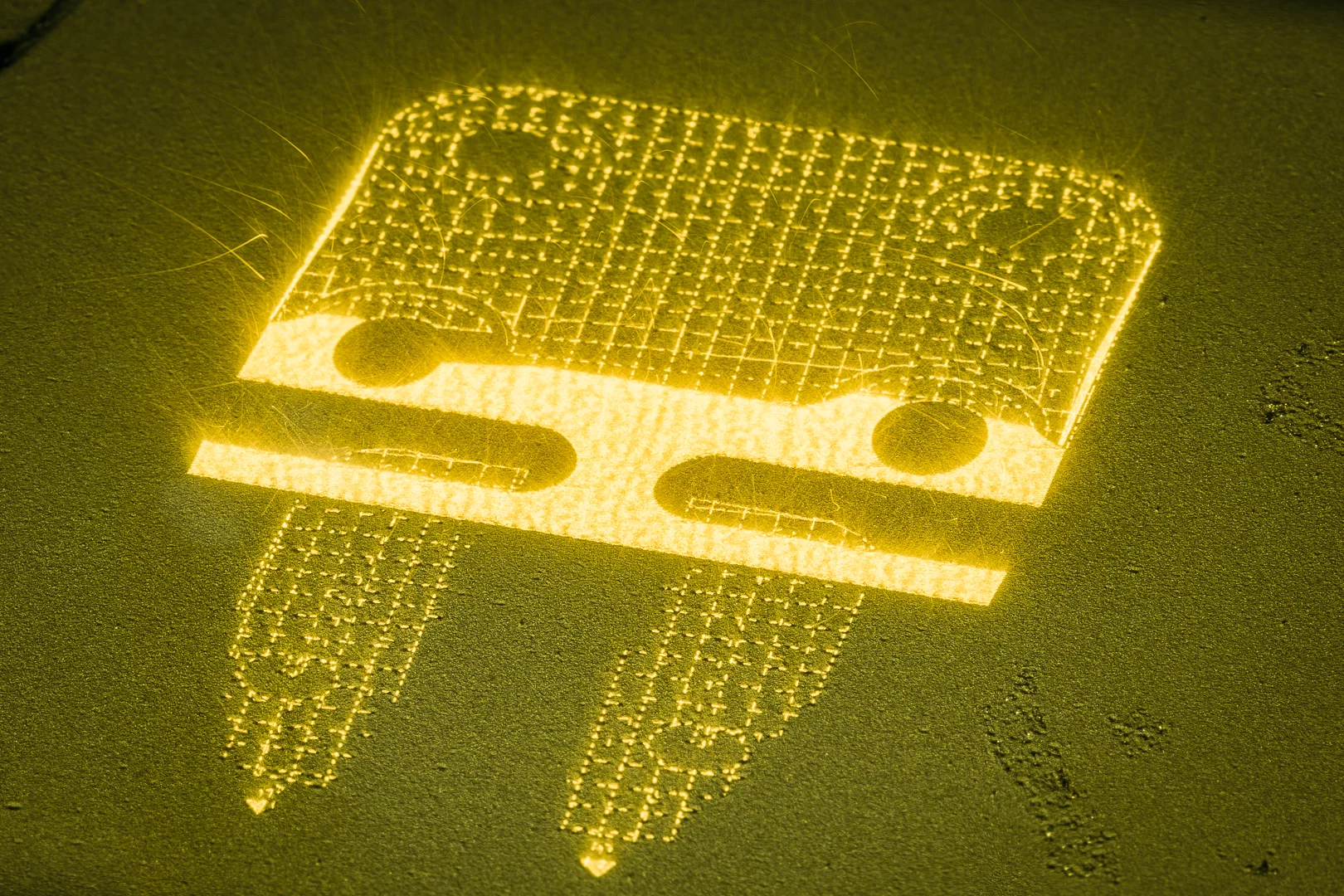
Also known as Laser Powder Bed Fusion (LPBF), Selective Laser Melting (SLM), or Direct Metal Laser Sintering (DMLS), this is currently the most widely adopted method for metal additive manufacturing. A high-energy laser selectively fuses metal powder layers within a powder bed. The process is conducted in an inert gas or vacuum environment to prevent oxidation. The result is high-density, high-strength components with excellent resolution.
- Applications: Aerospace brackets, medical implants, complex heat exchangers, lattice structures.
- Advantages: Excellent dimensional accuracy, strong mechanical properties, support for complex internal structures. It is also scalable for small to medium production volumes.
- Materials: Mainly used: Titanium alloys (Ti6Al4V), stainless steel (316L), aluminum alloys – AlSi10Mg, Inconel 718.
- Powder Requirements: Spherical, typically 15-63 or 15-45 µm in size, with high flowability and minimal satellite particles. Consistency in powder quality ensures repeatability and reduces defects in finished parts.

Figure 1: Laser Powder Bed Fusion Scheme – Additive Manufacturing Types
Powder Bed Fusion Electron Beam Melting (PBF-EB/M)
This method uses an electron beam under vacuum to melt metal powder. It’s well-suited for materials sensitive to oxidation and offers high build speeds due to its powerful heat source. The vacuum environment also enhances material purity and reduces contamination risks.
- Applications: Orthopedic implants, turbine blades, aerospace structures.
- Advantages: Lower residual stresses, faster builds for large parts, excellent material utilization. Especially effective for reactive metals.
- Materials: Titanium alloys, Titanium Aluminides, nickel superalloys.
- Powder Requirements: Spherical particles ranging from 45–106 µm, optimized for high packing density and conductivity under vacuum conditions. High purity and low oxygen content are critical to achieve reliable fusion and mechanical performance.
These types of metal additive manufacturing are among the most established and widely used in industrial applications, particularly where mechanical strength, corrosion resistance, and material purity are vital.
Directed Energy Deposition (DED)
DED uses a focused energy source (laser, electron beam, or plasma arc) to melt material as it is deposited, usually via a nozzle. It’s effective for repairing components, adding features to existing parts, or building large-scale metal parts. It supports printing with multiple materials and can be used to create graded compositions or bimetallic structures.
- Applications: Repair of turbine blades, large structural components, and functionally graded materials.
- Advantages: Multi-material capabilities, ability to work on existing parts, scalable build volumes. DED also allows localized reinforcement and in-situ alloying.
- Materials: Stainless steel, Inconel, Tool steels, titanium alloys, cobalt-chrome.
- Powder Requirements: Particle sizes typically range between 45–150 µm. Powder morphology is less critical than in PBF, but flowability and consistent feeding are essential for process stability and layer uniformity. Irregularly shaped particles can lead to nozzle clogging or uneven layer formation.
This is one of the most versatile additive manufacturing processes for large and hybrid structures, and it is increasingly used in the aerospace and defense sectors.
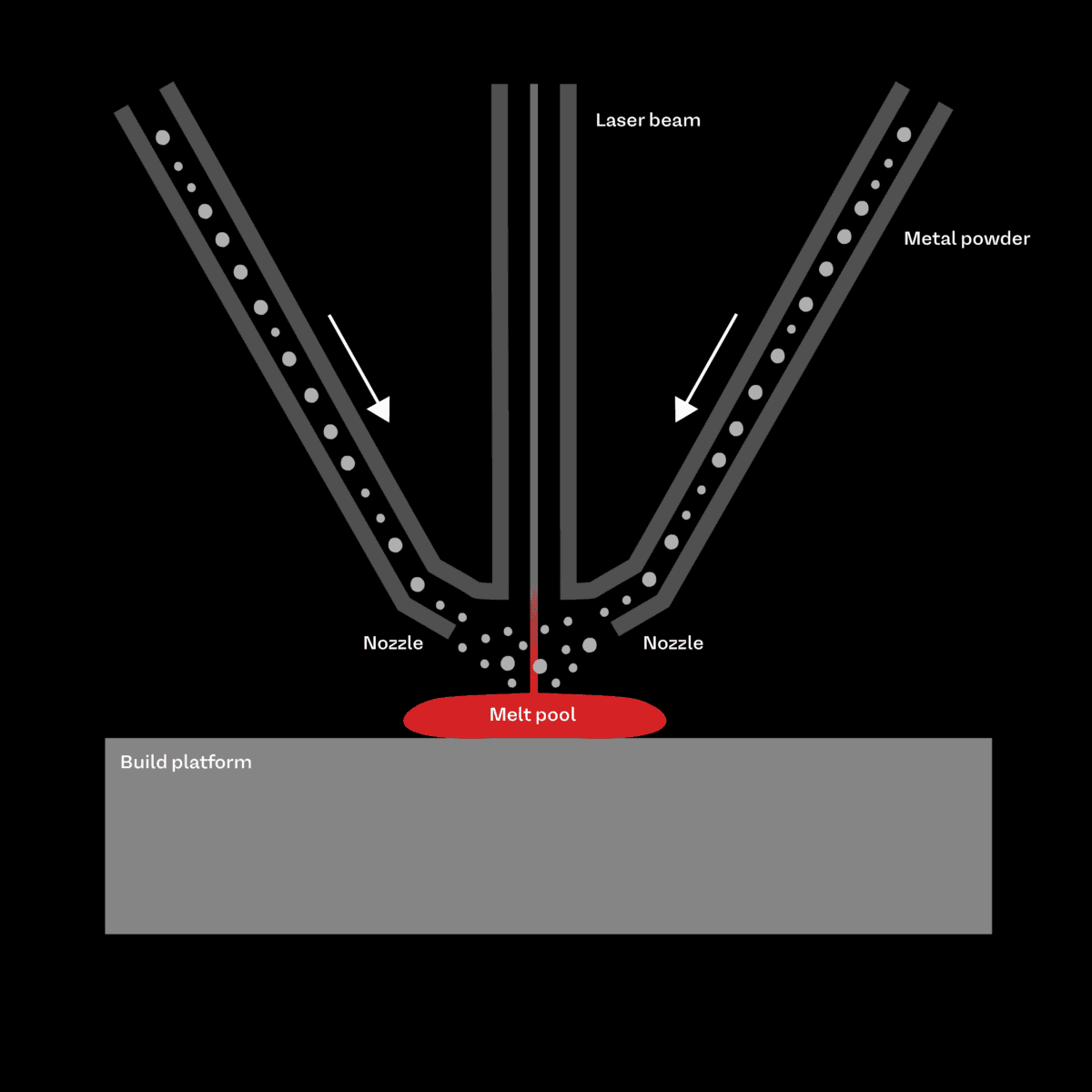
Figure 2: Direct Energy Deposition Scheme – Additive Manufacturing Types
Binder Jetting
This process involves selectively depositing a liquid binding agent onto a powder bed (metal, sand, or ceramic). After printing, the green part is cured, then sintered or infiltrated to achieve final properties. The separation of printing and densification steps gives designers flexibility in controlling final density and porosity.
- Applications: Metal parts with complex geometries, sand cores for casting, ceramic components.
- Advantages: High build speed, large part sizes, no support structures required. Cost-effective for producing parts in batches.
- Materials: Stainless steel, Inconel, tungsten-carbide, ceramics.
- Powder Requirements: Fine metal powders typically in the range of 5–25 or 5 – 45 µm, with good packing density and flowability. The powder shape can vary from near-spherical to irregular depending on the post-processing strategy. Binder compatibility and sintering behavior are key factors in material selection.
Among the different types of additive manufacturing, binder jetting is appreciated for its productivity, scalability, and lower post-processing complexity compared to melting-based techniques.
Material Jetting
Material jetting works similarly to inkjet printing, where droplets of photopolymer or wax are jetted layer-by-layer and cured with UV light. Different materials can be jetted simultaneously, allowing for multi-material and full-color part production.
- Applications: Medical models, dental guides, visual prototypes, product design.
- Advantages: High resolution and surface finish, full-color printing, smooth surfaces, and minimal post-processing.
- Materials: Photopolymers, wax-like resins.
Material jetting represents one of the high-resolution additive manufacturing techniques used in design, prototyping, and applications that benefit from realistic appearance and detail accuracy.
Material Extrusion
Most commonly recognized as Fused Deposition Modeling (FDM), this technique extrudes thermoplastic filament through a heated nozzle. It’s accessible, cost-effective, and supported by a wide ecosystem of materials and printers.
- Applications: Prototypes, jigs and fixtures, medical scaffolds, casings, low-volume functional parts.
- Advantages: Cost-effective, widely available, ease of use, ideal for rapid concept validation.
- Materials: PLA, ABS, PETG, TPU, PEEK. (Limited metal and ceramic extrusion also exist, e.g., bound metal filament.)
Among the 7 types of additive manufacturing, this is the most popular with hobbyists and entry-level industrial applications. It supports material combinations like carbon fiber-reinforced filaments and flexible elastomers.
Vat Photopolymerization
This method involves curing liquid photopolymer resin in a vat using a light source (laser or projector). It’s well-known for excellent surface finishes and high-resolution outputs.
- Applications: Dental models, hearing aids, casting patterns, microfluidic devices, miniatures.
- Advantages: High precision, smooth surfaces, suitable for detailed small parts, ideal for visual models and investment casting.
- Materials: UV-curable resins, ceramic-loaded resins, biocompatible photopolymers.
This is one of the more refined additive manufacturing methods used for applications requiring high accuracy and fine details. Its resolution makes it ideal for customized medical devices and precision tooling.
Sheet Lamination
In this process, sheets of material (paper, plastic, or metal) are bonded layer-by-layer and cut to shape. It’s less common but suitable for fast and affordable concept models.
- Applications: Visual prototypes, composite tooling, molds, educational models.
- Advantages: Low cost, fast processing, minimal waste, safe for office environments.
- Materials: Paper, plastic films, metal foils, composites.
Although not commonly used in metal applications, it remains part of the standardized types of additive manufacturing processes. It’s particularly relevant in low-budget settings or where mechanical strength is not a priority.
Conclusion
While all seven types of additive manufacturing offer unique capabilities, metal AM technologies like PBF-LB/M, PBF-EB/M, and DED are leading the way in industrial applications due to their material capabilities and mechanical performance. Binder jetting is emerging as a scalable method for mass production, while material extrusion and jetting dominate in the prototyping space.
As additive manufacturing evolves, understanding the different types of additive manufacturing methods and their respective strengths is key to selecting the right technology for a given application. Each process brings unique benefits and challenges in terms of material compatibility, resolution, mechanical properties, and economics.
Whether you’re looking for examples of additive manufacturing in action, or researching different types of additive manufacturing processes for your next project, this framework based on ISO/ASTM standards helps make sense of the landscape and its possibilities. These additive manufacturing techniques enable production innovation across industries and illustrate the full scope of available additive manufacturing processes today.
To learn more about additive manufacturing, see our comprehensive article: What is additive manufacturing.
If you’re searching for custom metal powders tailored for specific AM processes or considering in-house powder production capabilities, don’t hesitate to contact the AMAZEMET team. We offer both powder supply and compact ultrasonic atomization systems to support your research and production needs in metal additive manufacturing.
Share this content!